01 / The plant is not decoration / 植物不是装饰
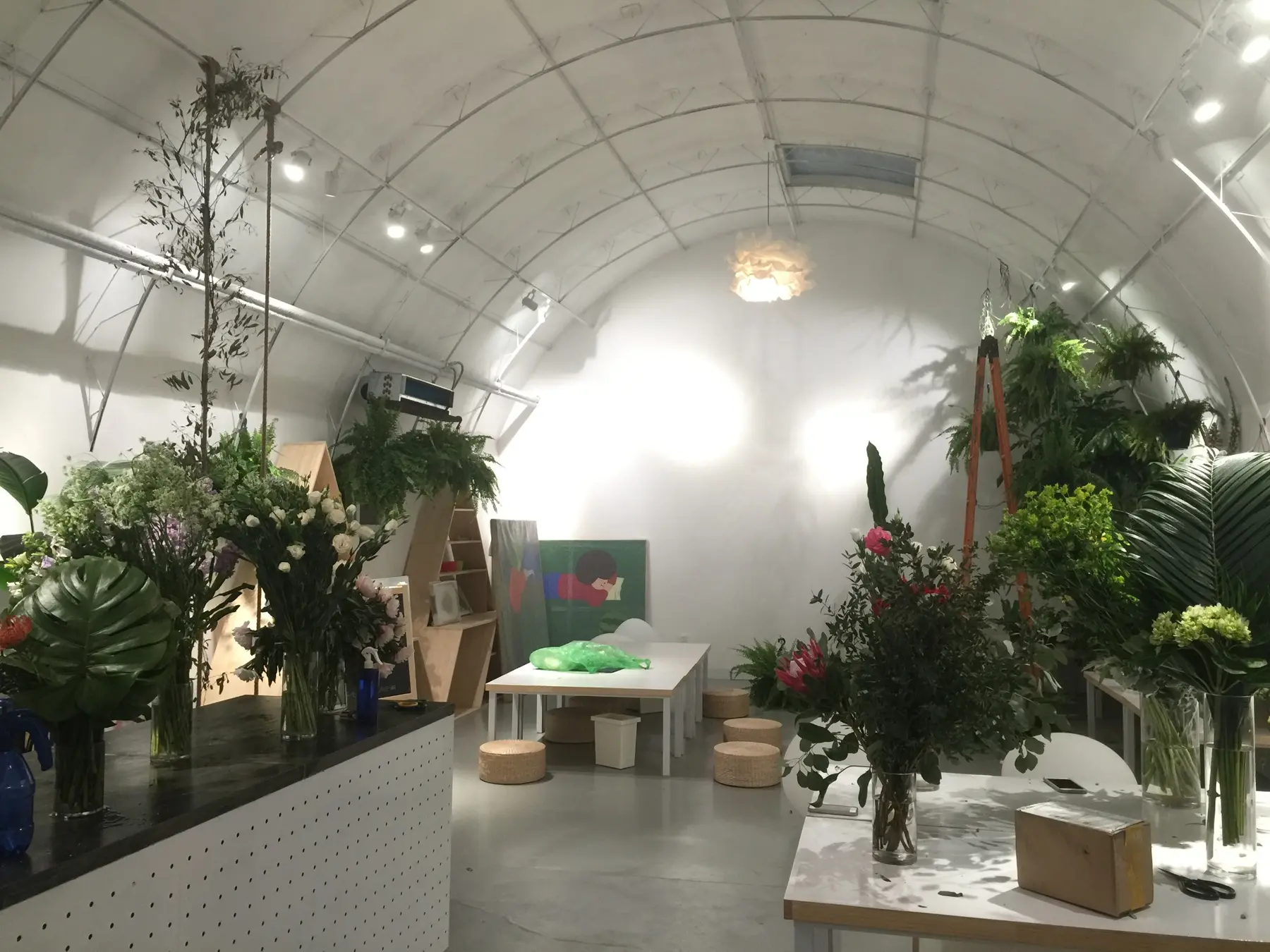
A decorative plant confirms an already finished room. Living matter does the opposite: it introduces needs, rhythms and responses that the display cannot fully predict. Light, water, temperature and contact continuously alter its form. The plant becomes a participant whose difference prevents the installation from closing around a single stable image.
装饰性植物用于确认一个已经完成的房间,而生命材料恰恰相反:它引入陈列无法完全预判的需求、节奏与回应。光、水、温度与接触持续改变其形式。植物成为参与者,其差异阻止装置封闭成单一稳定图像。
02 / Maintenance is part of form / 维护是形式的一部分
Once living matter enters an exhibition, watering and care are no longer backstage tasks. They determine appearance, survival and the temporal horizon of the work. Maintenance reveals that every apparently autonomous artwork depends on infrastructures and people, while plant life makes that dependency unusually visible.
当生命材料进入展览,浇灌与照料便不再是幕后任务。它们决定作品的外观、生存与时间跨度。维护揭示每件看似自主的作品都依赖基础设施与人的劳动,而植物生命使这种依赖格外可见。
03 / Containment is an ethical relation / 容纳是一种伦理关系
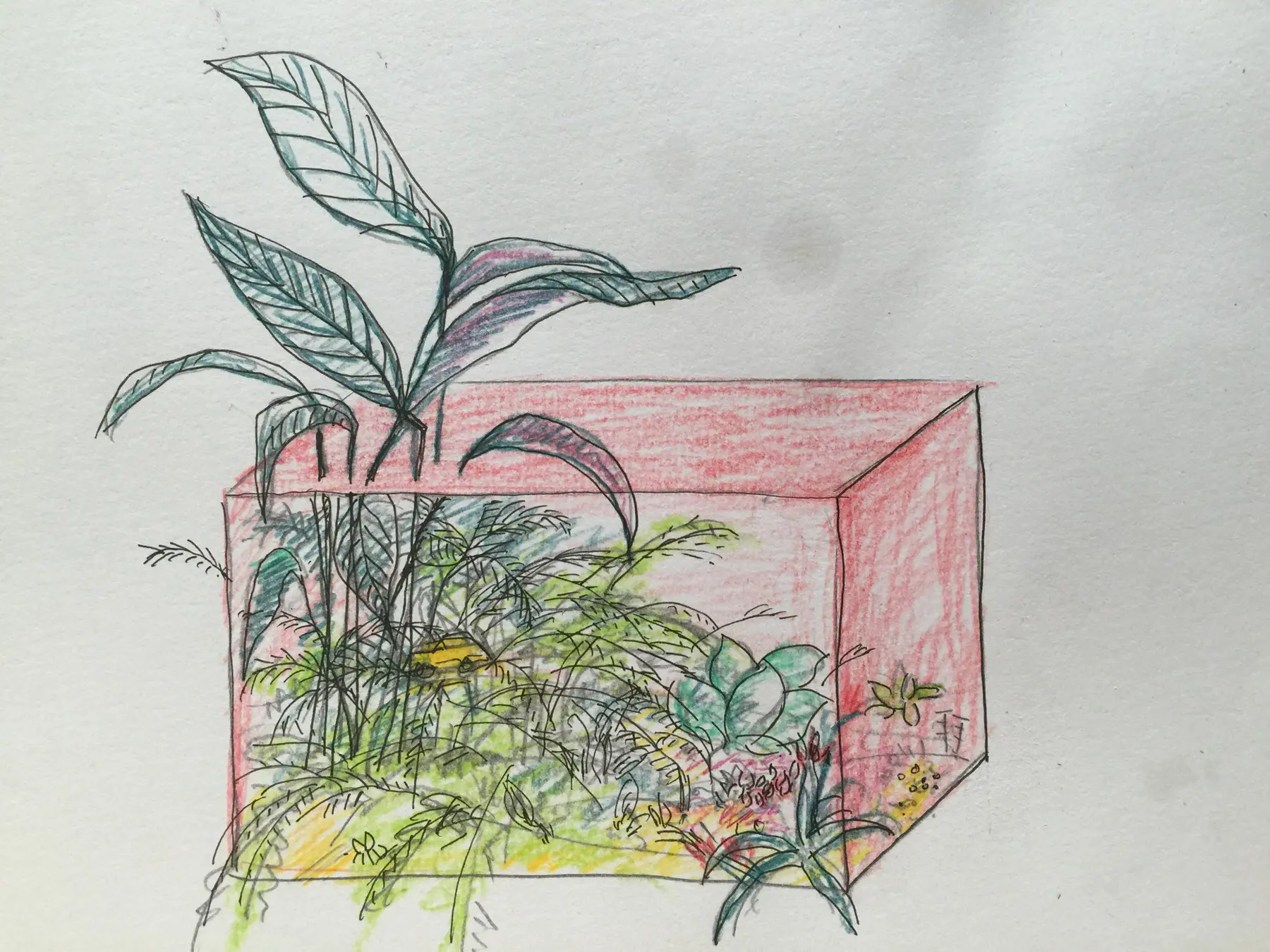
Pots, rooms, red light and constructed garden elements do not merely frame nature; they regulate where life may grow and how it is seen. The installation therefore stages a tension between care and control. To contain can mean to support, but it can also mean to discipline a living body into the requirements of display.
容器、房间、红色光线与人工花园元素并非只是为自然加框;它们规定生命可以在何处生长、以何种方式被观看。因此,装置呈现照料与控制之间的张力。容纳可以意味着支持,也可能意味着把生命身体规训进陈列要求。
04 / One image does not need to become one work / 图像不必被并成一件作品
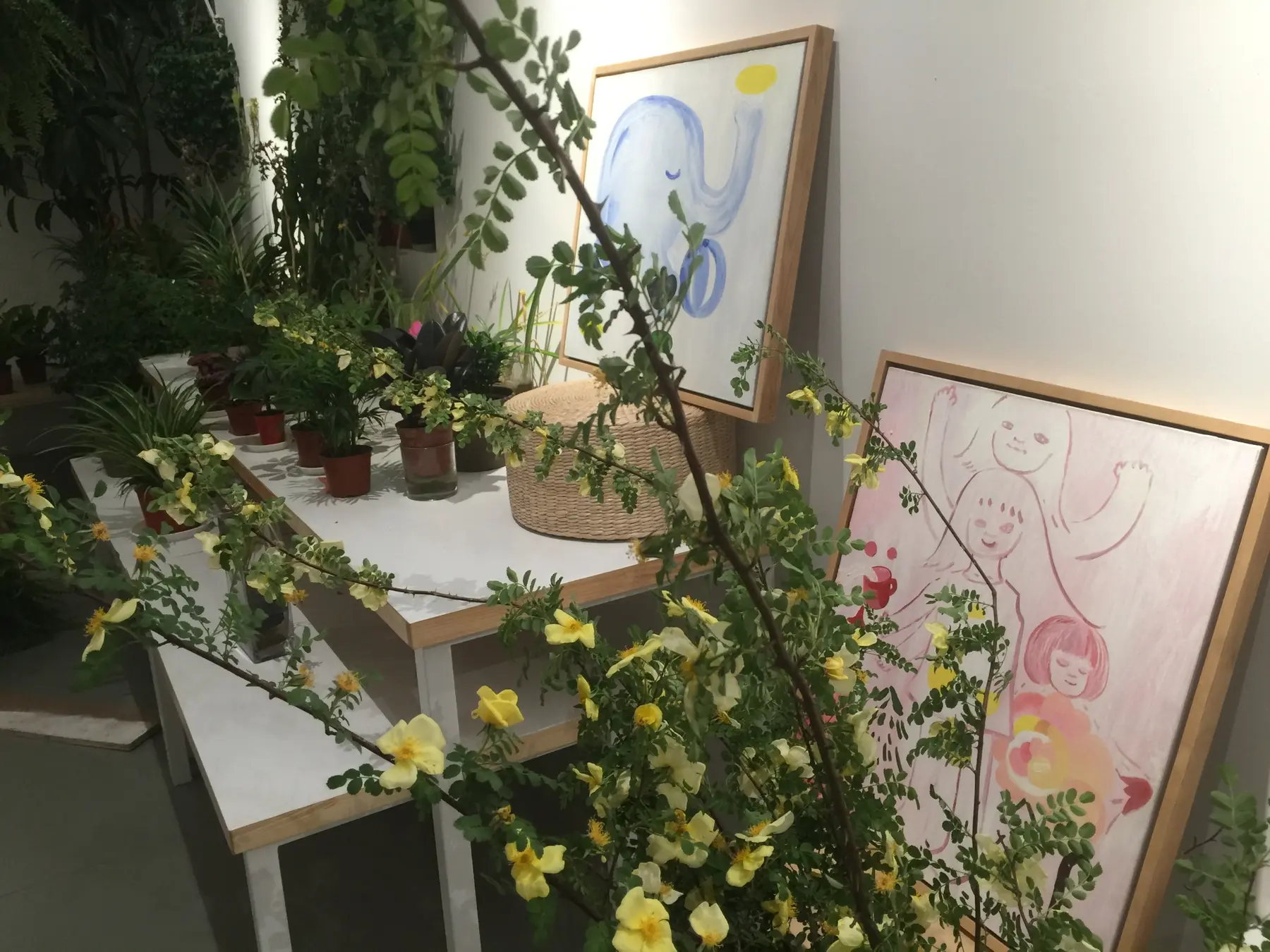
Plants, drawings, manufactured objects, coloured light and viewers return in different combinations. We keep the images beside one another without forcing them into a single finished work. Their value lies in recurrence: a material question travels from one room to another, changes scale and gathers new companions each time.
植物、绘画、工业物件、彩色光线与观看者以不同组合反复出现。我们让这些图像彼此相邻,却不强迫它们被并入一件已经完成的作品。它们的意义来自重复:同一个材料问题穿过不同房间,改变尺度,也在每一次出现时遇到新的同伴。
05 / The work continues through care / 作品通过照料继续
Watering, moving, pruning, cleaning and waiting continue to shape the installation after its first arrangement. We understand this care as part of the work's duration. It shifts authorship away from a single opening moment and toward the repeated acts that allow living matter—and the relations around it—to remain possible.
浇水、移动、修剪、清理与等待,在最初陈列完成之后仍持续改变装置。我们把这种照料理解为作品持续时间的一部分。作者性由此不再集中于开幕的单一时刻,而转向那些让生命材料及其周围关系得以延续的重复行动。