Publications

02 / WU—LIAO

Research papers, project essays, readers and editions that continue to change.

研究论文、项目文章、读本,以及仍在继续变化的出版内容。

We publish when a conversation needs more room, when images begin to form an argument or when several projects unexpectedly meet around the same question.

RESEARCH PATHS / 研究路径

Five paths hold the archive together.

五条路径把影像、人物、项目、文章与文献连接起来。

A

Judgement and Legitimacy

判断与正当性

49films + short records
部影片与短记录
OUR POSITION / 我们的立场

Studios, schools, markets and exhibitions all make judgements. We look at the people, habits and institutions that allow one material gesture to be taken seriously while another is dismissed as error or novelty.

工作室、学校、市场和展览都在作出判断。我们关注其中的人、习惯与制度:为什么一种材料动作会被认真对待,另一种却被归为错误或新奇。

  1. Q1

    Who is allowed to name the new?谁有权命名新事物?

  2. Q2

    How does an image acquire public authority?一张图像如何获得公共权威?

B

Technique, Discipline and Time

技巧、训练与时间

66films + short records
部影片与短记录
OUR POSITION / 我们的立场

Repetition leaves traces in the hand, voice and breath. We ask how training sharpens attention, when it hardens into obedience and what a pause can interrupt.

重复会在手、声音与呼吸中留下痕迹。我们追问训练如何磨锐注意,它何时固化为服从,以及一次停顿能够打断什么。

  1. Q1

    When does repetition become knowledge?重复何时转化为知识?

  2. Q2

    Can a pause become part of authorship?停顿能否成为作者性的一部分?

C

Learning and the Production of Knowledge

学习与知识生产

122films + short records
部影片与短记录
OUR POSITION / 我们的立场

Learning often begins with a small perceptual shift: hearing a rhythm, noticing how a material resists or seeing an ordinary place differently. Conversation, rehearsal and collective making give that shift time to travel between people.

学习常从一次细小的感知变化开始:听见一种节奏,注意到材料的阻力,或重新看见一个日常地点。对话、排练与共同制作,让这种变化有时间在人之间传递。

  1. Q1

    What must be felt before it can be understood?什么需要先被感受到,之后才可能被理解?

  2. Q2

    Can teaching redistribute rather than reproduce authority?教学能否重新分配权威,而不是复制权威?

D

Tradition and the Contemporary

传统与当代

50films + short records
部影片与短记录
OUR POSITION / 我们的立场

Every use of tradition is a decision made in the present. A house is inhabited again, a vessel enters another market and a gesture is taught to another hand. We follow what changes during those passages.

每一次使用传统,都是当下作出的决定:一座房屋再次被居住,一件器物进入另一种市场,一个动作被教给另一双手。我们追随这些转移中真正发生的变化。

  1. Q1

    How can inheritance remain active without becoming command?继承如何保持活性,而不变成命令?

  2. Q2

    What changes when a house, a vessel or a gesture enters another present?当房屋、器物或动作进入另一个当下时,什么发生了变化?

E

Selfhood, Existence and Adaptation

自我、存在与适应

68films + short records
部影片与短记录
OUR POSITION / 我们的立场

Body, language, memory and discipline do not always agree. We stay with the moments when a person adapts, refuses, repeats a script or suddenly notices that another response is possible.

身体、语言、记忆与规训并不总是一致。我们停留在那些时刻:一个人正在适应、拒绝、重复某种脚本,或突然意识到另一种回应仍有可能。

  1. Q1

    What remains of a self that is always adapting?一个不断适应的自我还剩下什么?

  2. Q2

    Can existence be approached without fixing it to one body or name?存在能否在不被固定于单一身体或名字时被接近?
01
Evolving online dossier

WU—LIAO: A Moving-Image Register

无不吴聊:影像工作档案

149 films and short records, with selected bilingual readings that continue to grow.

2026—Live
02
Research Paper 01 / bilingual

Selfhood After the Script

脚本之后的自我

NPC, animality and the politics of attention across our conversations with Sun Xun.

2026Live
03
Research Paper 02 / bilingual

Adaptation Without Agency

没有主体性的适应

Plant intelligence, continuity and civilisation across our conversations with Zheng Jiang.

2026Live
04
Research Paper 03 / bilingual

Improvising the Public

即兴生成公共空间

Rhythm, pedagogy and situated internationalism across our conversations with Kong Hongwei.

2026Live
05
Research Paper 04 / bilingual

The Authority to Name the New

命名新事物的权力

Tradition, expertise and the temporal instability of value across our conversations with Bai Ming.

2026Live
06
Research Paper 05 / bilingual

Designing Under Constraint

限制之中的设计

Body, interval, authorship and the ethics of everyday form across our conversations with Peng Wenhui.

2026Live
07
Research Paper 06 / bilingual

Childhood Is an Ecological Archive

童年是一座生态档案

Food, memory and care across our conversations with Fan Xueyi.

2026Live
08
Research Paper 07 / bilingual

The Face of Accelerated Time

加速时代的面孔

Portraiture, anxiety and platform visibility across our conversations with Ma Jinghu.

2026Live
09
Research Paper 08 / bilingual

Entering the Crack

进入裂缝

Technique, unreadability and the time of tradition across our conversations with Qiu Zhizhong.

2026Live
10
Position paper / method

Conversation as Medium: Working Reader

对话作为媒介:工作读本

Listening, relation, assembly and circulation as an artistic and curatorial method.

2026Live
11
Bilingual research cluster

Source Notes 01: Instinct and Adaptation

资料笔记 01:本能与适应

Plant life, urban discipline, resilience and the possible loss of self.

2026—Live
12
Bilingual research cluster

Source Notes 02: Mind, Body and Consciousness

资料笔记 02:心、身体与意识

Brain, heart, breath, meditation and the limits of proof.

2026—Live
13
Bilingual research cluster

Source Notes 03: Rhythm and Translation

资料笔记 03:节奏与翻译

Art education, cross-modal perception, jazz and cultural translation.

2026—Live
14
Project dossier

The Diachronic House in the Future: Production File

未来的老房子:制作档案

Credits, moving images and research on inherited architecture, dwelling and rural transformation.

2018 / online 2026Live
15
Project Essay 01 / bilingual

Exhibition Is a Field of Relation

展览是一座关系场

Spatial sequence, adjacency and encounter as materials of exhibition-making.

2026Live
16
Project Essay 02 / bilingual

Participation Must Be Able to Change the Work

参与必须能够改变作品

A public-programme protocol for consequential participation, facilitation, material negotiation and consent.

2026Live
17
Practice Essay 03 / bilingual

Voice Before the Edit

剪辑之前的声音

Voice, duration, irreversibility and the embodied prehistory of Wu Qian’s interview method.

2026Live
18
Research Essay 04 / bilingual

Living Matter, Unstable Display

生命材料与不稳定陈列

Plants, maintenance, containment and care across a provisional installation research constellation.

2026Live
19
Position Essay 05 / bilingual

Production Is Where the Work Thinks

制片是作品思考的地方

Access, time, sound, infrastructure and care as constitutive decisions inside artistic form.

2026Live
20
Annotated working bibliography

Reader 01: Literature and References

读本 01:文献与参考

Ten contextual reading paths and sixty annotated references across art theory, media, ecology, pedagogy and production.

2026—Live
21
Living institutional record

Wu Qian: Selected Web CV

吴倩:精选网络履历

Wu Qian's selected institutional record for curators, institutions and collaborators.

2026Live
NEXT MATERIAL / 接下来进入的材料

The archive is built to receive what comes next.

这套档案结构已经为后续材料留出位置。

01 / FILM

YouTube + long-form moving image

Long-form films will enter as complete sequences, with bilingual titles, chapters, people and paths into the wider research.

长影片将以完整序列进入,并连接双语标题、章节、人物与更大的研究路径。

02 / LIBRARY

Books, essays and exhibition texts

Each new text will be placed beside the films and projects it changes. Readers can then follow a reference back into the work and see why it matters there.

每一份新文本都会被放到它所改变的影片与项目旁边。读者可以由此返回作品,并看见这份文献为什么在这里重要。

03 / PROJECT

Scripts, plans, stills and credits

Project material will unfold across time: from an initial question and production process to its public form and later return.

剧本、方案、现场图像与署名将沿时间展开:从最初的问题与制作过程,到公共呈现及日后的再次返回。

TEN QUESTIONS / 十个问题

We return to the same questions from different places.

我们从不同的人、影像与项目出发,反复回到同一组问题。

01

RESEARCH ARGUMENT

Conversation Produces Public Knowledge

对话生产公共知识

When does an interview cease to be content and become an artistic research form?
访谈何时不再只是内容,而成为一种艺术研究形式?

STARTING POINT / 从这里开始

A conversation becomes a public form when the question, encounter, edit, circulation and later annotation are treated as one continuous composition. Knowledge is not extracted from a guest and delivered intact; it is negotiated between voices and remains available for later disagreement.

当提问、相遇、剪辑、传播与后续注释被视为同一项连续构成时,对话才成为公共形式。知识并非从受访者身上提取后完整交付,而是在多种声音之间协商,并为后来的异议保留空间。

THE TENSION / 其中的张力

Dialogue is not automatically democratic. Editing, invitation and distribution still allocate authority. The research task is therefore to expose those operations rather than celebrate participation in the abstract.

对话并不会自动带来民主。邀请、剪辑与传播仍然分配权威。因此研究任务不是抽象赞美参与,而是使这些操作变得可见。

FROM OUR PRACTICE / 回到我们的实践

Our authorship begins with attention: whom we invite, what we ask, when we stay silent, how long we remain and how one encounter is allowed to meet another.

我们的作者性从注意力开始:邀请谁、问什么、何时沉默、停留多久,以及如何让一次相遇与另一次相遇发生关系。

IMAGE ARGUMENT / 图像论证04 IMAGES
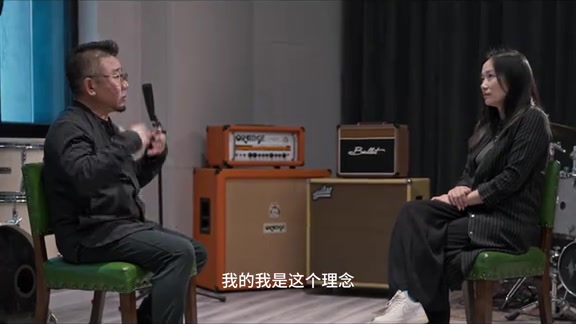
WU—LIAO conversation with Kong Hongwei
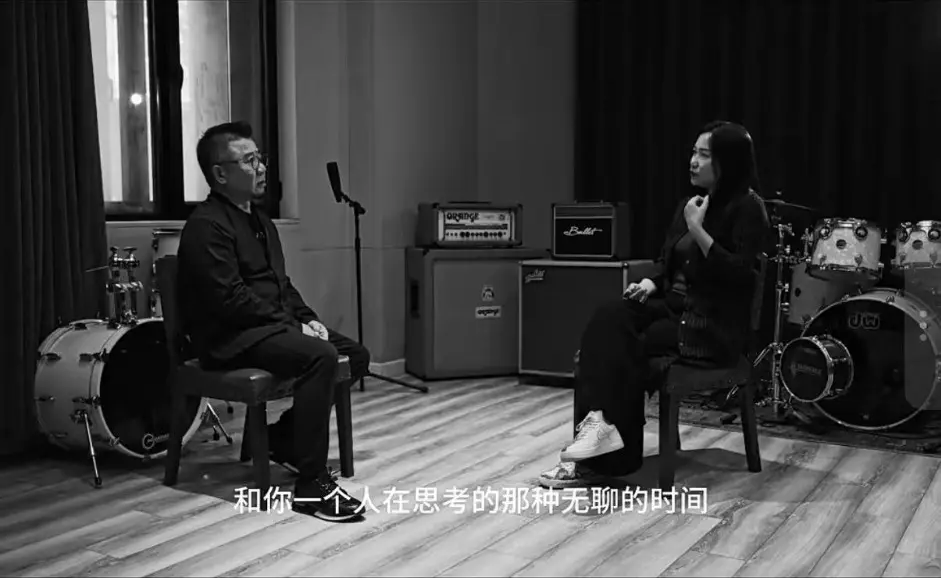
01 / RELATED ARCHIVE FRAME / 关联档案画面WU—LIAO conversation with Kong Hongwei孔宏伟 / 对话帧

The studio relation makes listening, rhythm and technical equipment visible as part of the production of musical knowledge.

工作室关系使倾听、节奏与技术设备作为音乐知识的生产条件共同可见。

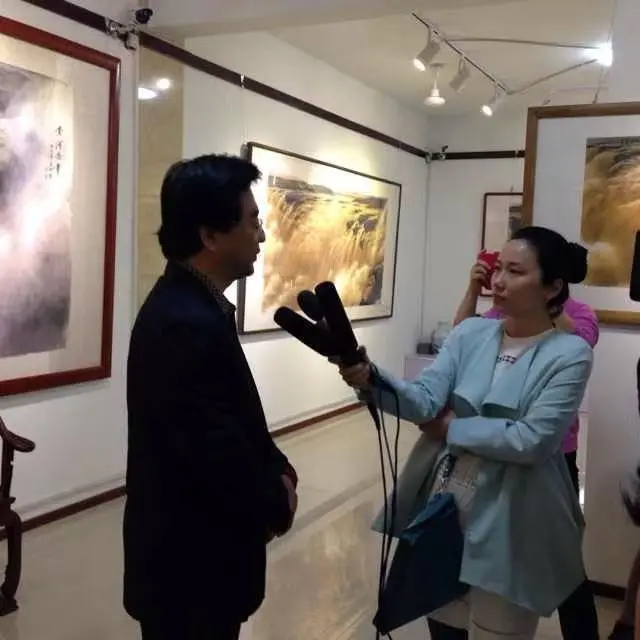
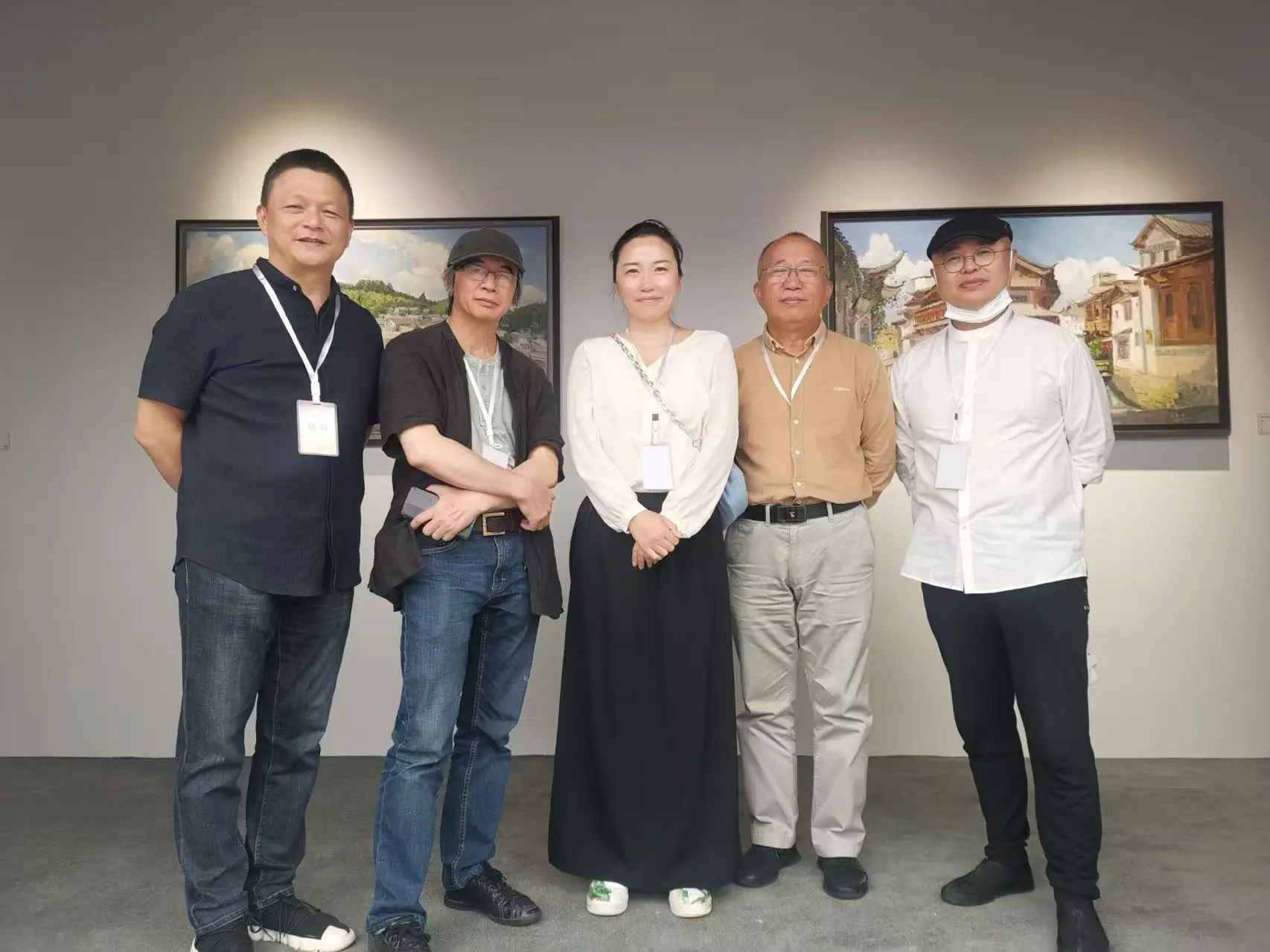
Interview inside a gallery
02 / RELATED ARCHIVE FRAME / 关联档案画面Interview inside a gallery展览访谈

The interview operates inside the exhibition rather than after it, joining mediation and display in one situation.

访谈发生在展览内部而不是展览之后,使传播与陈列进入同一现场。

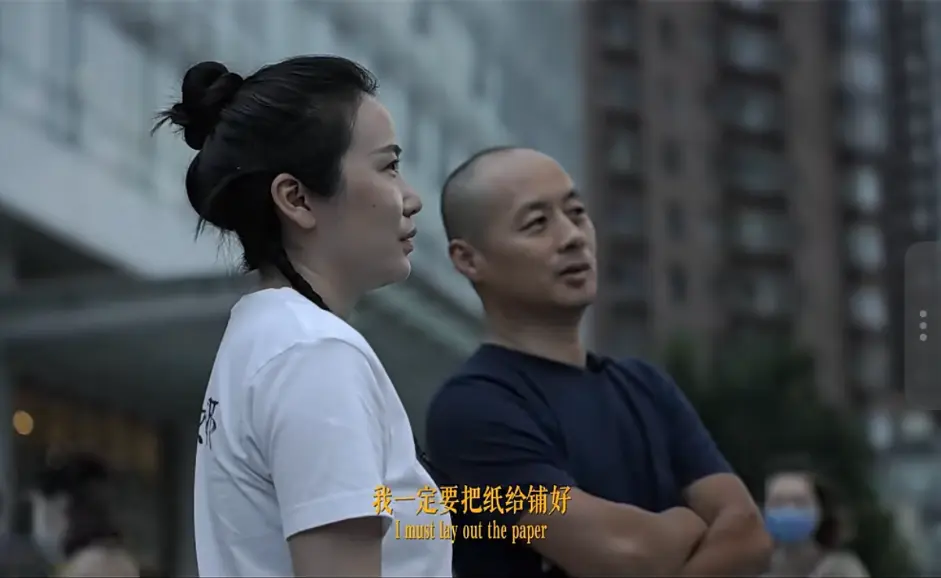
WU—LIAO conversation with Ma Jinghu
03 / RELATED ARCHIVE FRAME / 关联档案画面WU—LIAO conversation with Ma Jinghu马精虎 / 对话帧

A walking conversation connects the face, historical visibility and accelerated social time to bodily movement through the city.

行走中的对话把面孔、历史可见性与加速社会时间连接到城市中的身体移动。

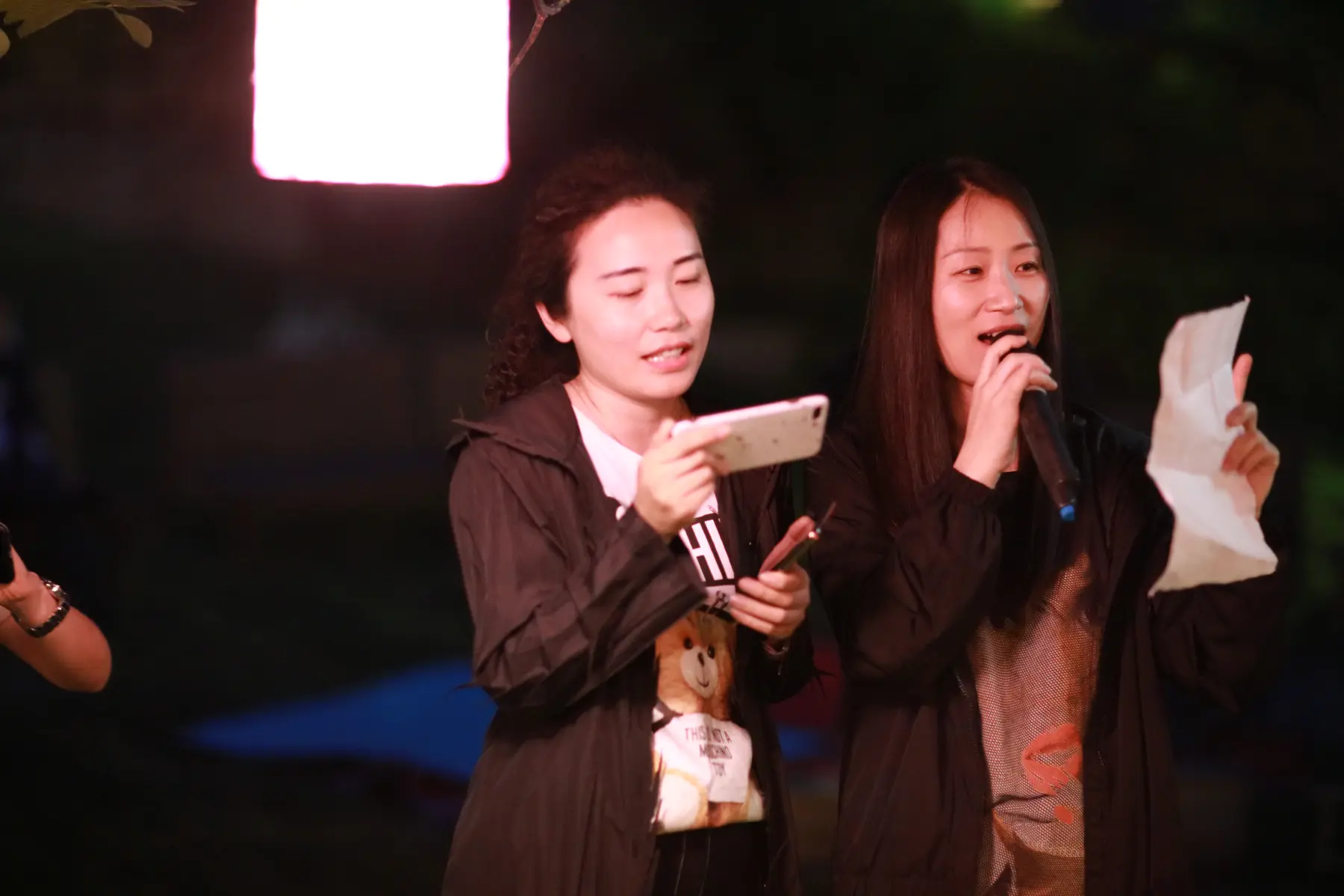
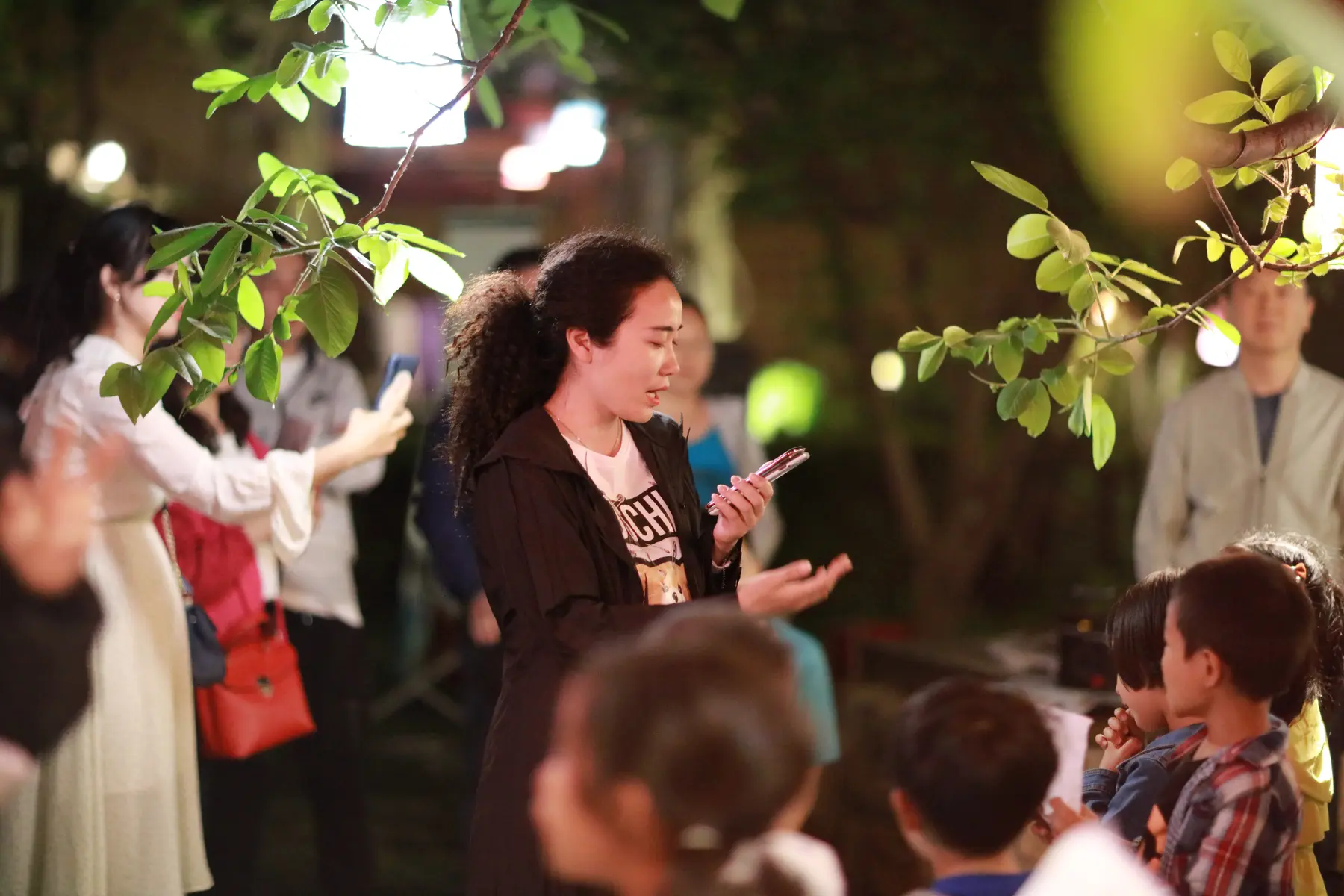
Voice in public space
04 / RELATED ARCHIVE FRAME / 关联档案画面Voice in public space声音与公共空间

The speaking situation locates voice among listeners, plants and an informal environment rather than on a separated stage.

发言现场把声音置于听众、植物与非正式环境之间,而不是隔离的舞台上。

02

RESEARCH ARGUMENT

Adaptation Is an Ambivalent Politics

适应是一种矛盾政治

Can the ability to survive changing conditions also erase the capacity to sense and refuse them?

适应变化环境的生存能力,是否也会抹去感知与拒绝环境的能力?

STARTING POINT / 从这里开始

Across the plant and adaptation records, resilience is separated from agency. An organism may continue functioning while losing relations, memory or form. Adaptability is therefore read neither as virtue nor failure, but as a political distribution of what must change and what is allowed to remain.

在植物与适应主题的资料中,韧性与主体性被区分开来。生命体可以继续运转,却失去关系、记忆或形态。因此,适应既不是单纯美德,也不是失败,而是一种政治性分配:谁必须改变,什么可以保持。

THE TENSION / 其中的张力

The argument must avoid romanticising ‘nature’ as pure or pre-social. Plants are useful here because they disclose situated intelligence, not because they offer an innocent world outside civilisation.

这一论证必须避免把“自然”浪漫化为纯净、前社会的存在。植物之所以重要,是因为它揭示在地智能,而不是提供一个文明之外的无辜世界。

FROM OUR PRACTICE / 回到我们的实践

We often let a concrete object carry a larger question. A seed or a plant can lead us toward the ethics of urban life without being forced to explain the human world.

我们常让一个具体物承载更大的问题:从种子或植物的可见行为走向城市生活伦理,但不强迫它们替人类世界作解释。

IMAGE ARGUMENT / 图像论证04 IMAGES
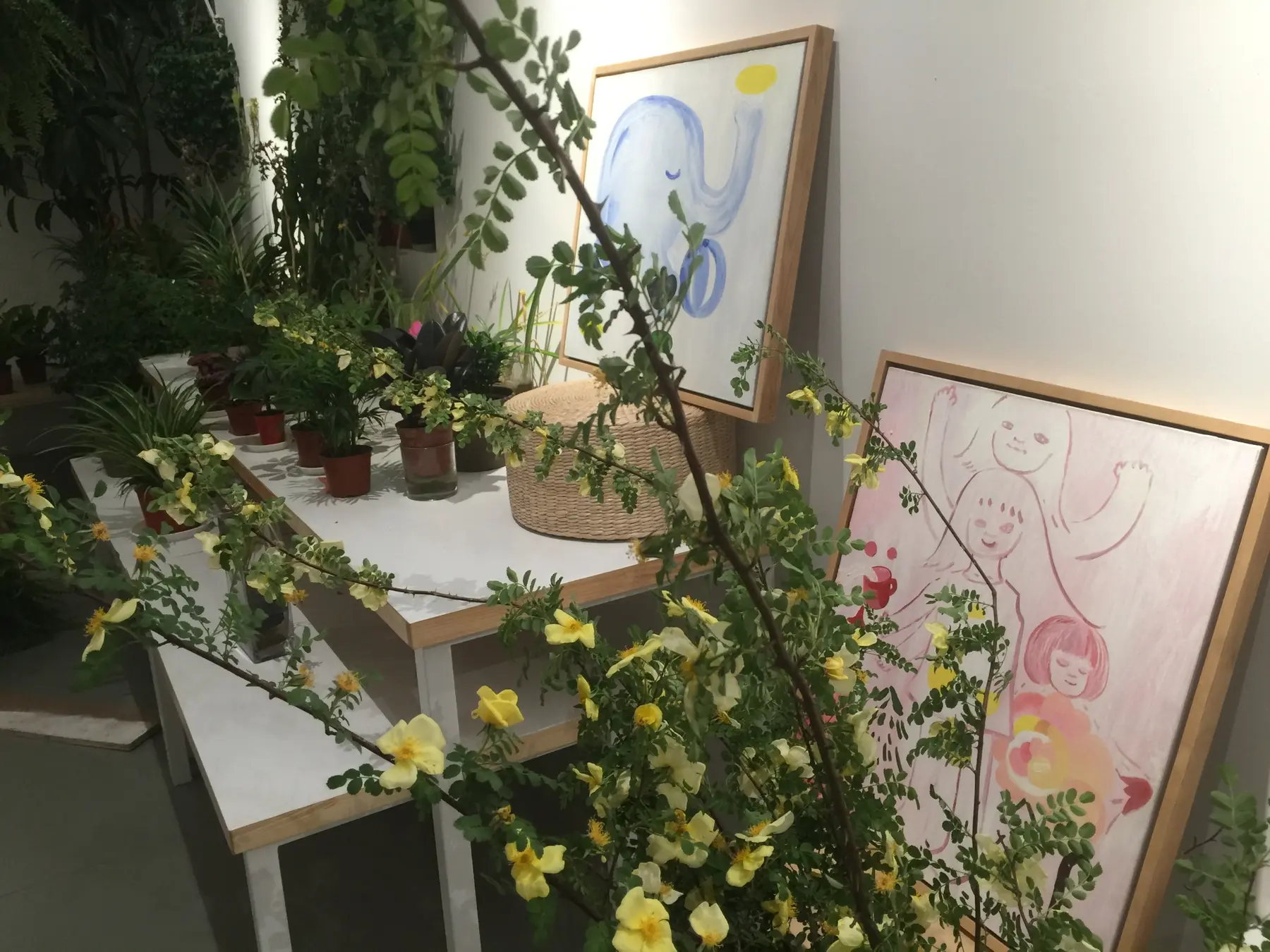
Plant and drawing detail
01 / RELATED ARCHIVE FRAME / 关联档案画面Plant and drawing detail植物与绘画

Plant matter interrupts the boundary between representation and the living material represented.

植物材料打断再现与被再现生命材料之间的边界。

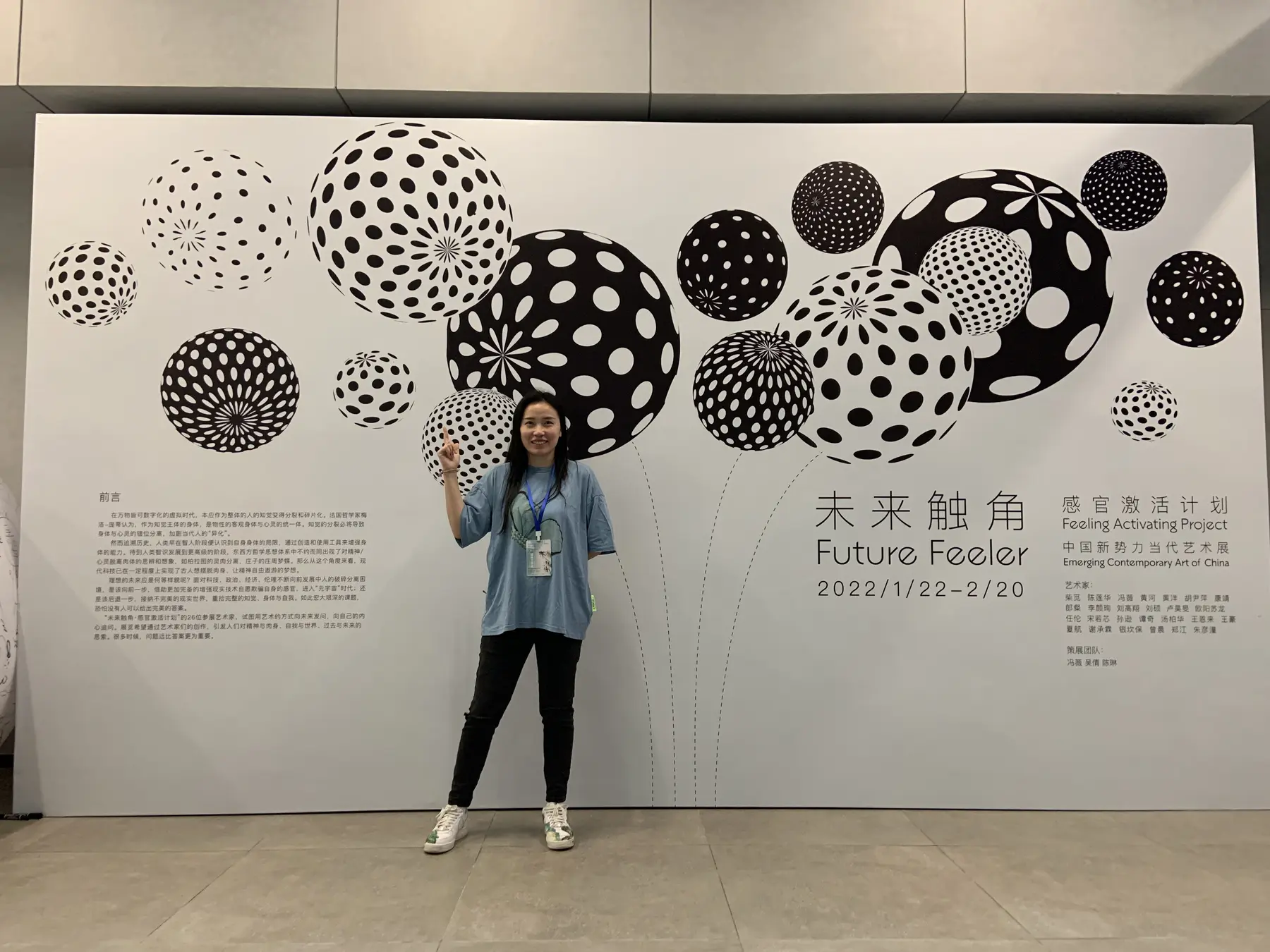
Encounter with the Future Feeler display
02 / RELATED ARCHIVE FRAME / 关联档案画面Encounter with the Future Feeler display展览语境

A body standing before the display turns exhibition viewing into a scale relation between image, text and visitor.

身体站在陈列前,使展览观看成为图像、文字与观看者之间的尺度关系。

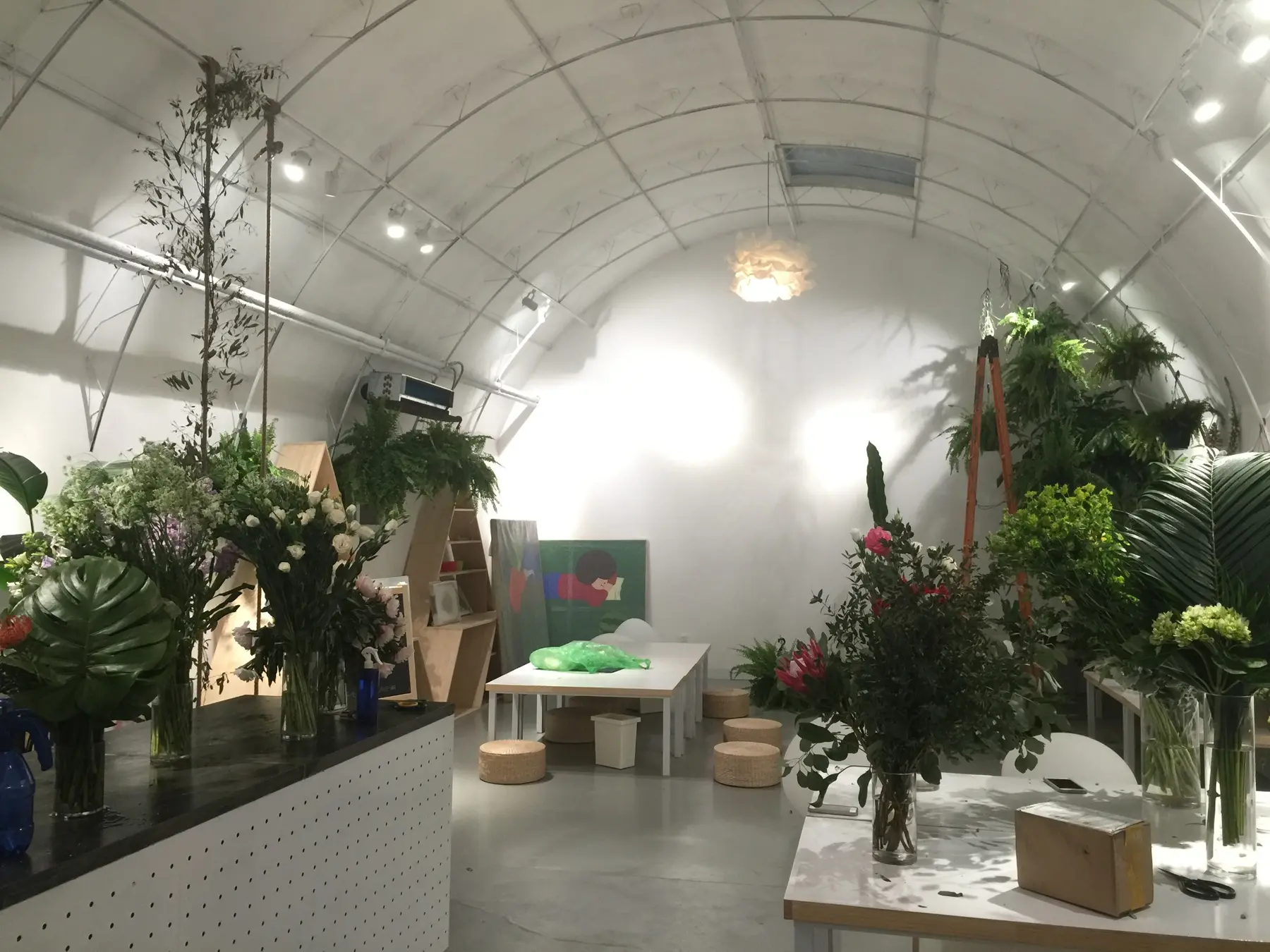
Plant installation room
03 / RELATED ARCHIVE FRAME / 关联档案画面Plant installation room参与式环境

The room treats living growth, furniture and exhibition architecture as one unstable spatial system.

空间把生命生长、家具与展览建筑视为同一不稳定系统。

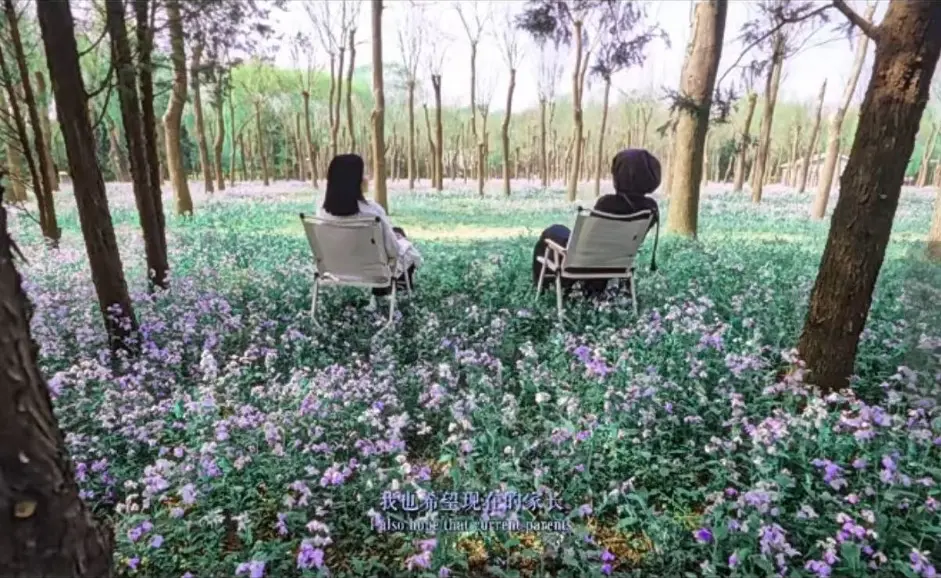
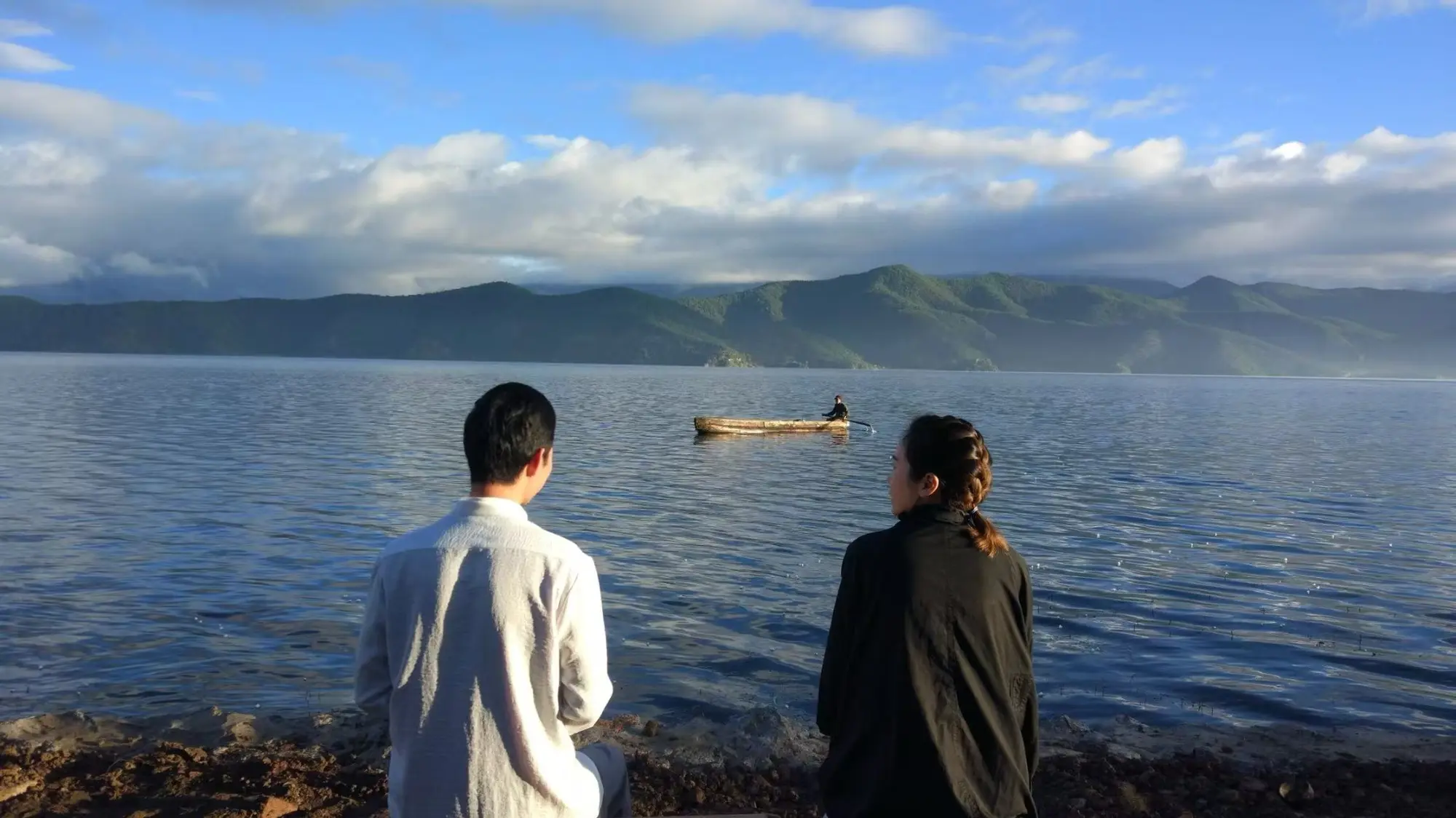
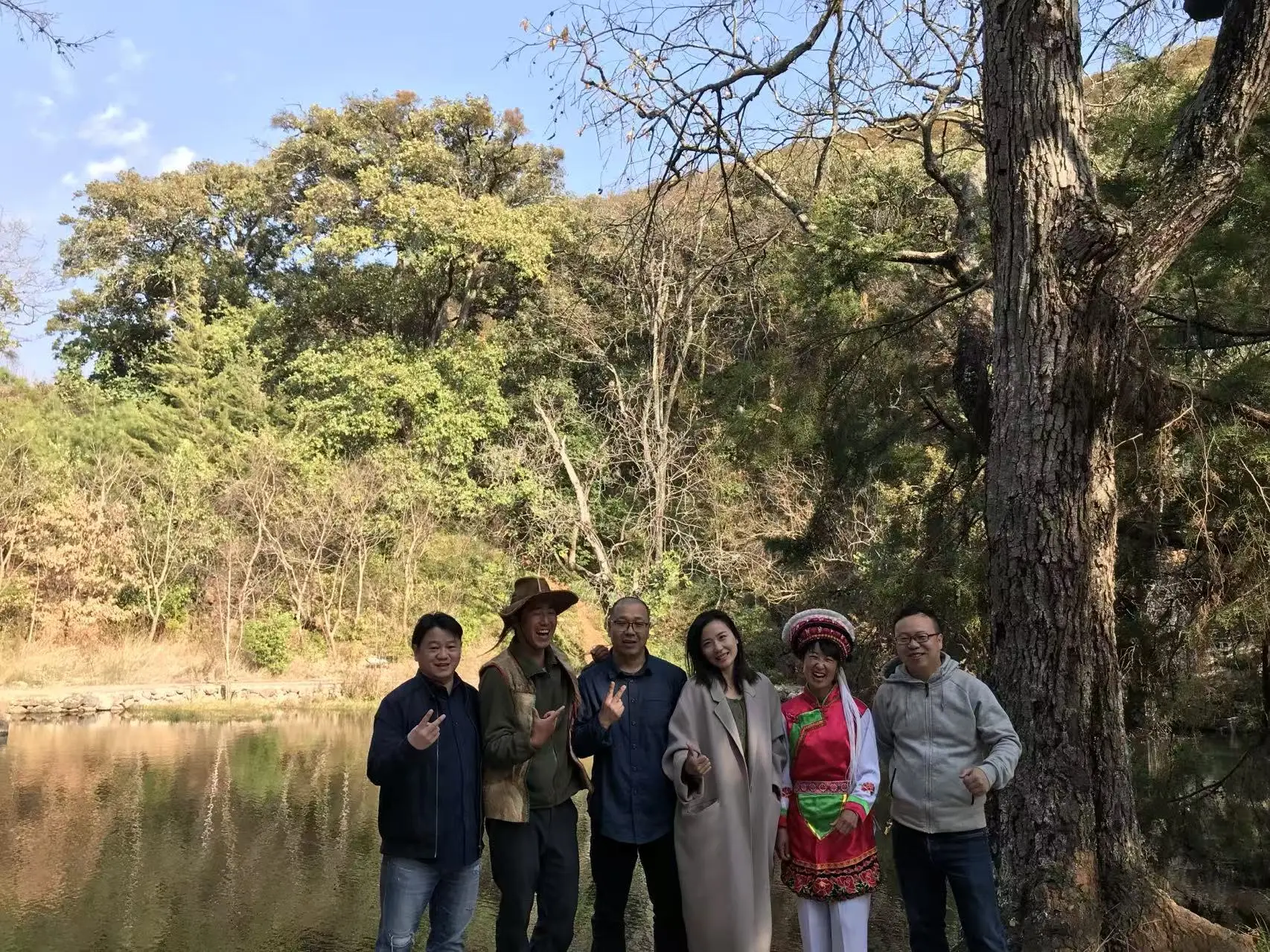
Field conversation beside a lake
04 / RELATED ARCHIVE FRAME / 关联档案画面Field conversation beside a lake田野与湖泊

Distance, weather and the lake enter the composition as active conditions of the encounter.

距离、天气与湖面作为相遇的主动条件进入构图。

03

RESEARCH ARGUMENT

The Self Has No Single Location

自我没有单一位置

What becomes possible when brain, heart, breath and attention are treated as competing models rather than a factual quiz?

当大脑、心、呼吸与注意被视为竞争性的解释模型,而不是知识问答时,会发生什么?

STARTING POINT / 从这里开始

The consciousness records resist locating thought in one organ or doctrine. Scientific explanation, embodied experience, cultural language and metaphysical speculation are kept in productive proximity. Art operates here by staging their incompatibility without forcing premature resolution.

意识主题资料拒绝把思想固定在某一器官或学说之中。科学解释、身体经验、文化语言与形而上推测被置于具有生产力的近距离关系中。艺术的作用,是让它们的不兼容共同在场,而不急于调和。

THE TENSION / 其中的张力

Keeping explanations open cannot become an excuse for false equivalence. The archive distinguishes experimentally testable claims from lived or philosophical accounts while still asking how they meet in experience.

保持解释开放不能成为制造虚假等价的借口。档案会区分可实验检验的主张与生活性、哲学性叙述,同时继续追问它们如何在经验中相遇。

FROM OUR PRACTICE / 回到我们的实践

We use the interview to stay with uncertainty. A guest is not asked to close the question; different ways of knowing are allowed to sound beside one another.

我们用访谈与不确定性相处。受访者不必终结问题,不同的认识方式可以在同一场对话中并置发声。

IMAGE ARGUMENT / 图像论证04 IMAGES
Stage reading archive
01 / RELATED ARCHIVE FRAME / 关联档案画面Stage reading archive舞台与声音

Shared reading makes voice collective: timing, hesitation and response become part of the work's live form.

共同朗读使声音获得集体性:节奏、迟疑与回应成为现场形式的一部分。

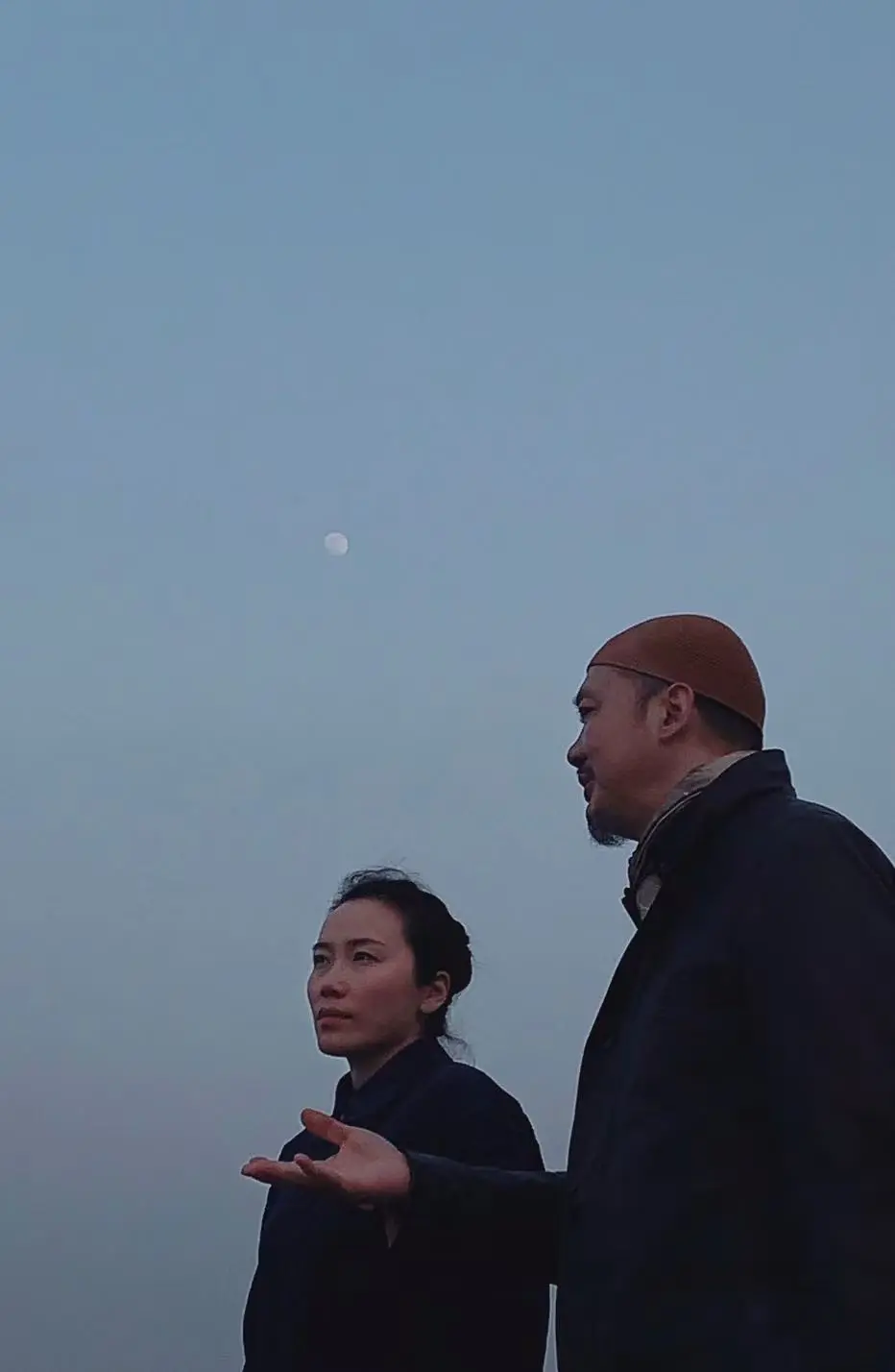
Conversation in an open landscape
02 / RELATED ARCHIVE FRAME / 关联档案画面Conversation in an open landscape对话与地平线

The upward viewpoint makes exposure to weather and horizon visible, shifting dialogue away from a controlled studio situation.

仰视视角使天气与地平线的暴露变得可见,让对话离开受控的工作室环境。

WU—LIAO conversation with Sun Xun
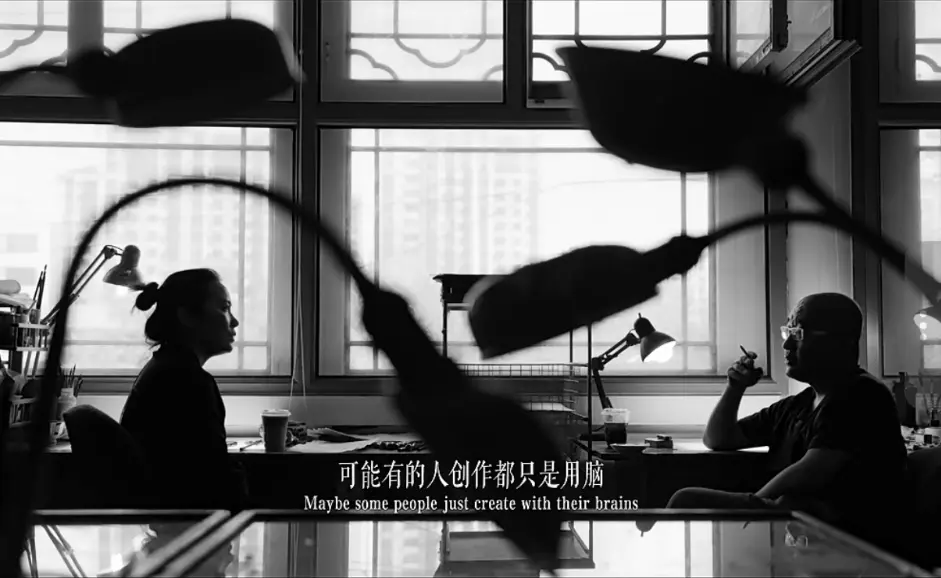
03 / RELATED ARCHIVE FRAME / 关联档案画面WU—LIAO conversation with Sun Xun孙逊 / 对话帧

Silhouette, screen and subtitle form a layered image of selfhood: the speaking body remains present while representation interrupts it.

剪影、屏幕与字幕形成关于自我的分层图像:说话的身体仍然在场,同时被再现机制打断。

Consciousness / source frame
04 / RELATED ARCHIVE FRAME / 关联档案画面Consciousness / source frame意识 / 资料帧

Brain, heart and breath remain competing images for consciousness rather than a single settled location.

大脑、心与呼吸在这里仍是意识的多重图像,而非唯一确定的位置。

04

RESEARCH ARGUMENT

A Medium Is Also an Institution

媒介也是一种制度

Who decides whether an unfamiliar material gesture is knowledge, experiment or error?

谁来决定一种陌生的材料动作是知识、实验,还是错误?

STARTING POINT / 从这里开始

The ceramics and calligraphy clusters show that a medium is never only matter. It also contains lineages, standards, schools, markets and authorised ways of seeing. Expertise carries embodied knowledge, but can harden into a border that protects inherited expressions from transformation.

陶瓷与书法资料表明,媒介从来不只是材料,还包含谱系、标准、教育、市场和被授权的观看方式。专业知识承载具身经验,却也可能凝固为边界,保护继承表达免受改变。

THE TENSION / 其中的张力

Experiment is not valuable merely because it is new, and tradition is not legitimate merely because it is old. The critical task is to make the criteria of judgement historically visible.

实验并不因新而自动有价值,传统也不因古老而自动正当。批判任务是让判断标准的历史条件显形。

FROM OUR PRACTICE / 回到我们的实践

We move a dispute inside one medium into a curatorial question: what kind of room, language or institution lets an unfamiliar work be taken seriously?

我们把媒介内部的争论带向一个策展问题:怎样的空间、语言与制度,能够让陌生作品被认真对待?

IMAGE ARGUMENT / 图像论证04 IMAGES
Installation process
01 / RELATED ARCHIVE FRAME / 关联档案画面Installation process过程与组装

The process image keeps handling and placement visible, preventing the final arrangement from appearing self-produced.

过程画面保留搬运与安置,使最终陈列不被误认为自行生成。

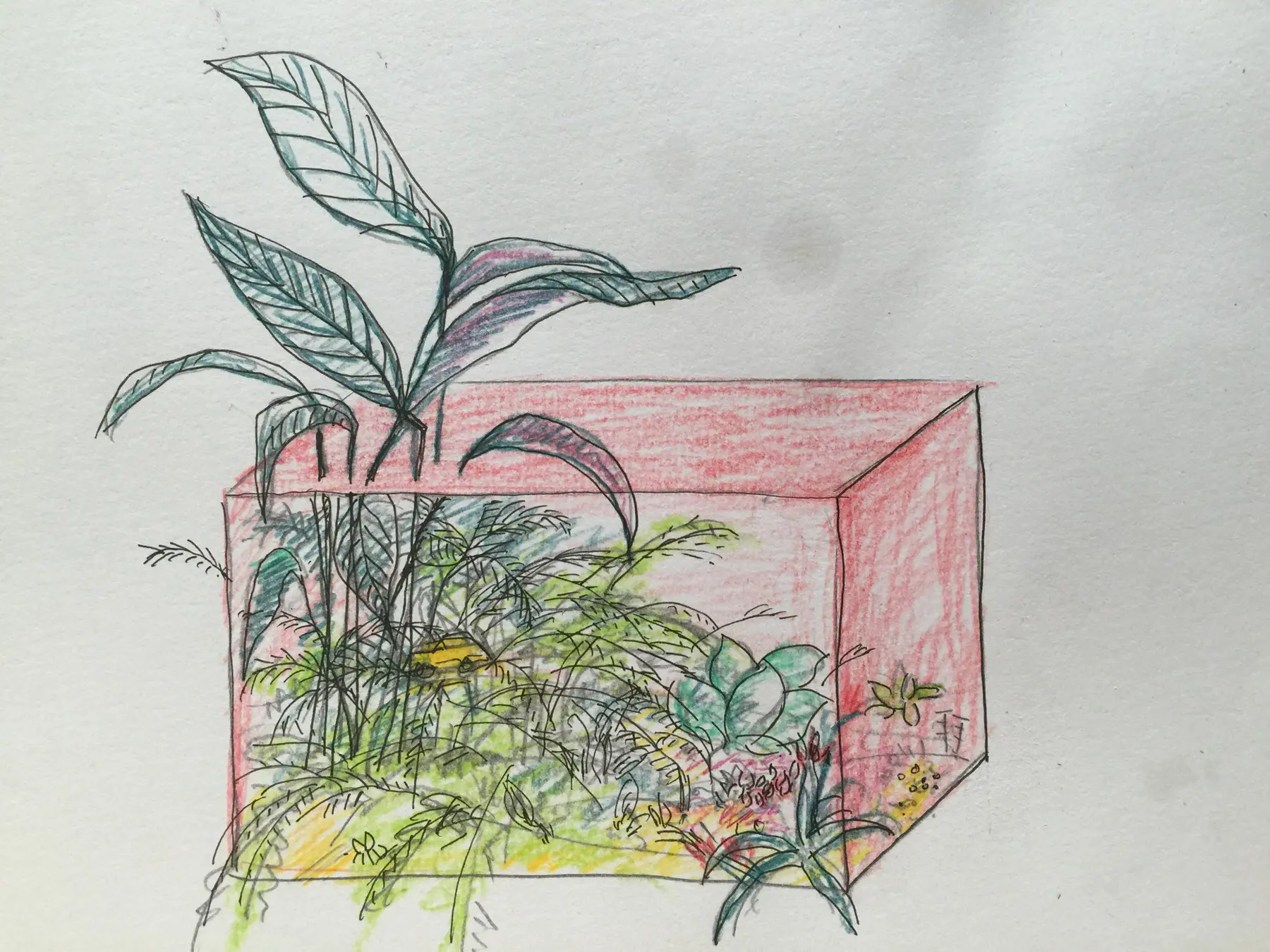
Spatial installation study
02 / RELATED ARCHIVE FRAME / 关联档案画面Spatial installation study空间研究

The drawing functions as a proposition for relations among plant, container, frame and viewer rather than a decorative sketch.

图纸不是装饰性草图,而是关于植物、容器、框架与观看者关系的空间命题。

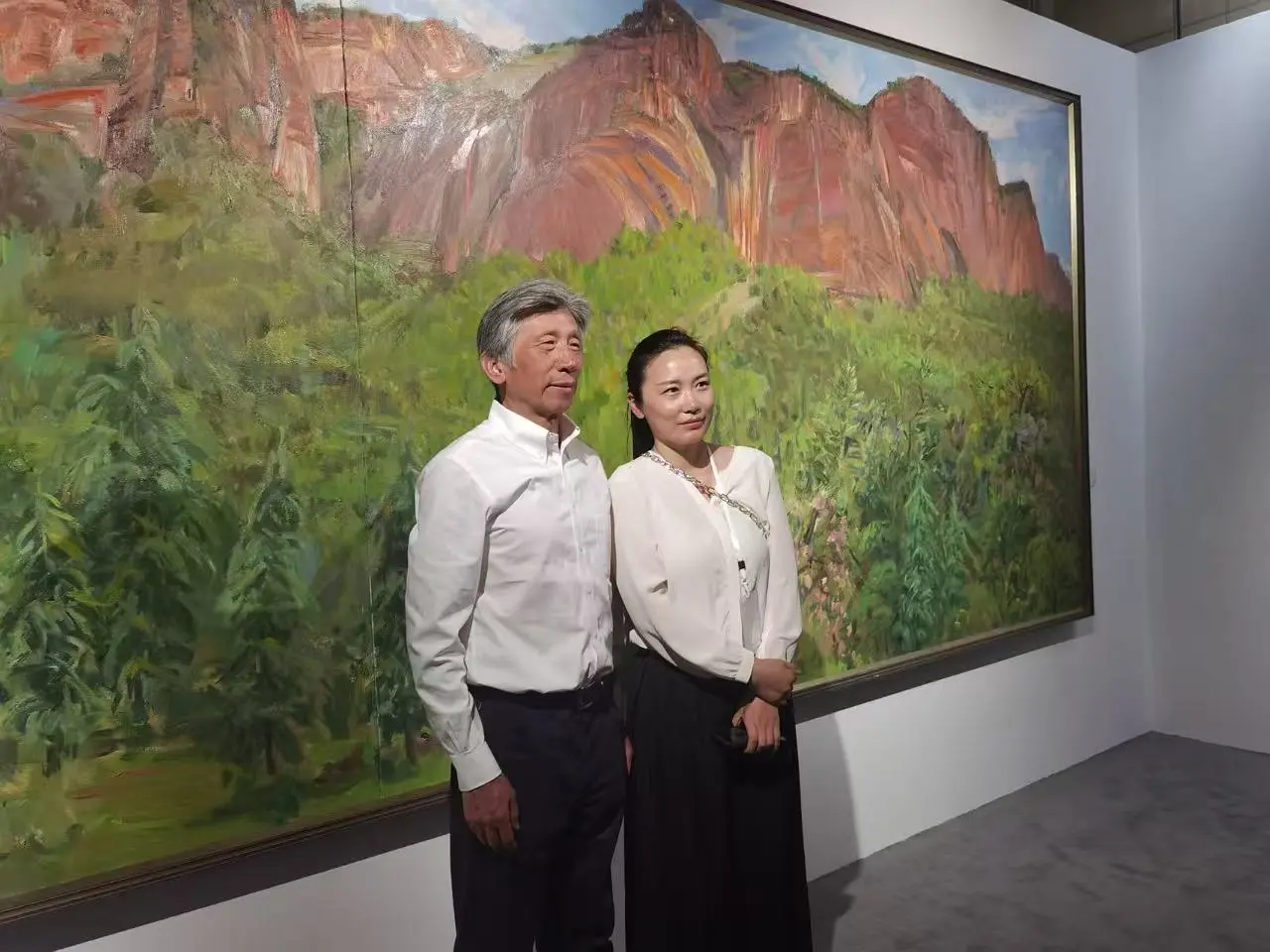
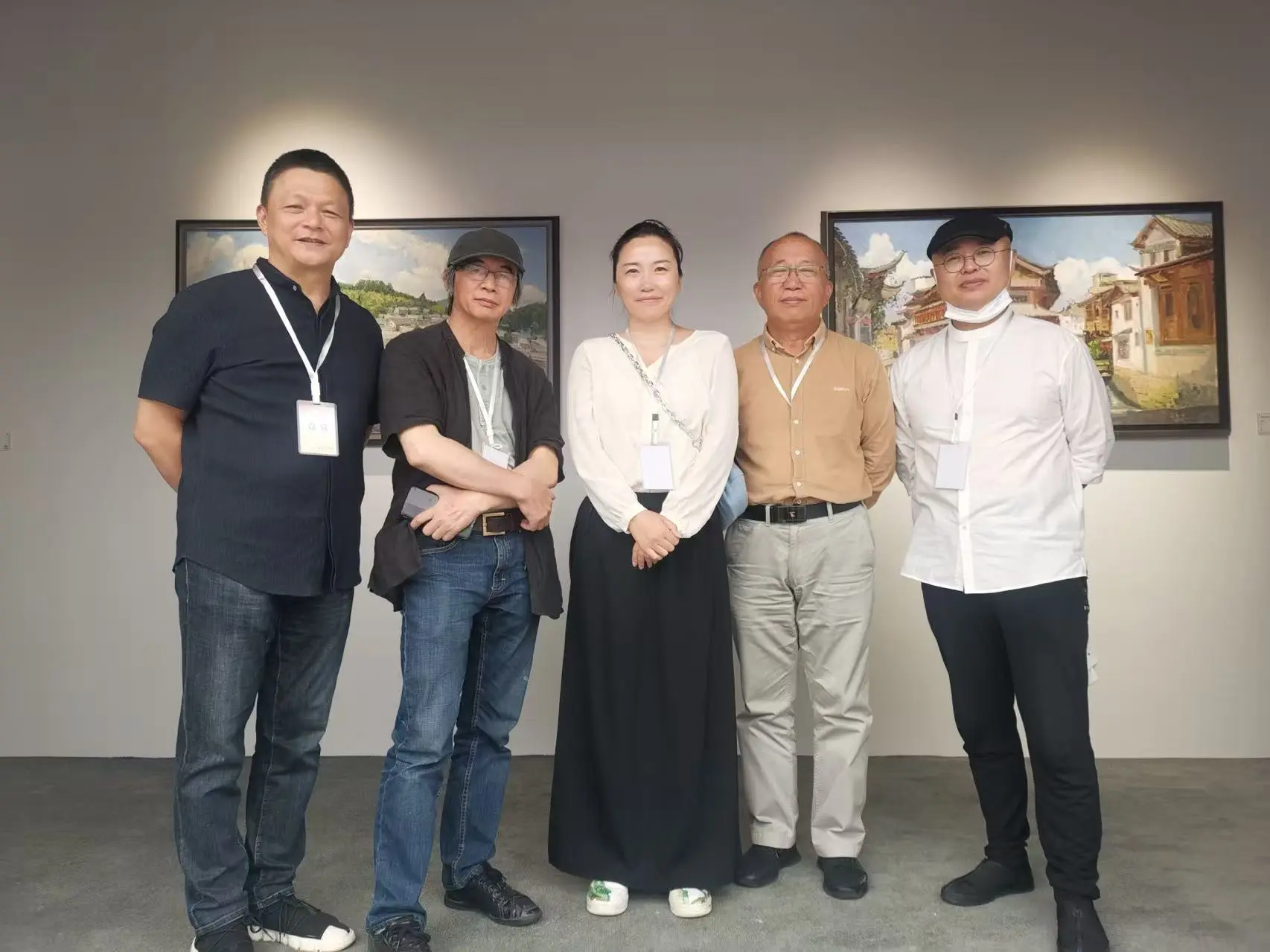
Exhibition network
03 / RELATED ARCHIVE FRAME / 关联档案画面Exhibition network展览关系

The group and the painted landscape occupy one visual field, allowing social presence to become part of exhibition meaning.

人物群体与绘画景观处于同一视觉场,使社会性在场成为展览意义的一部分。

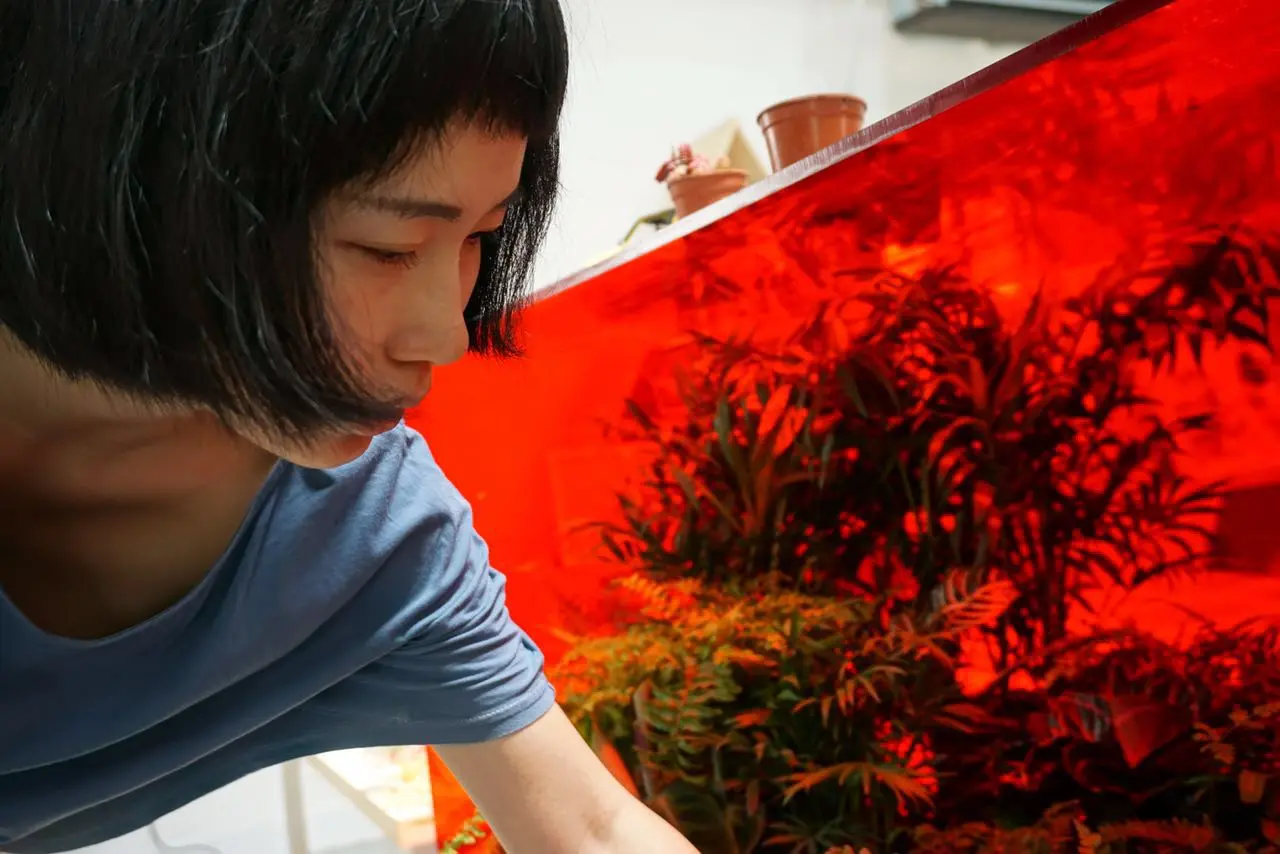
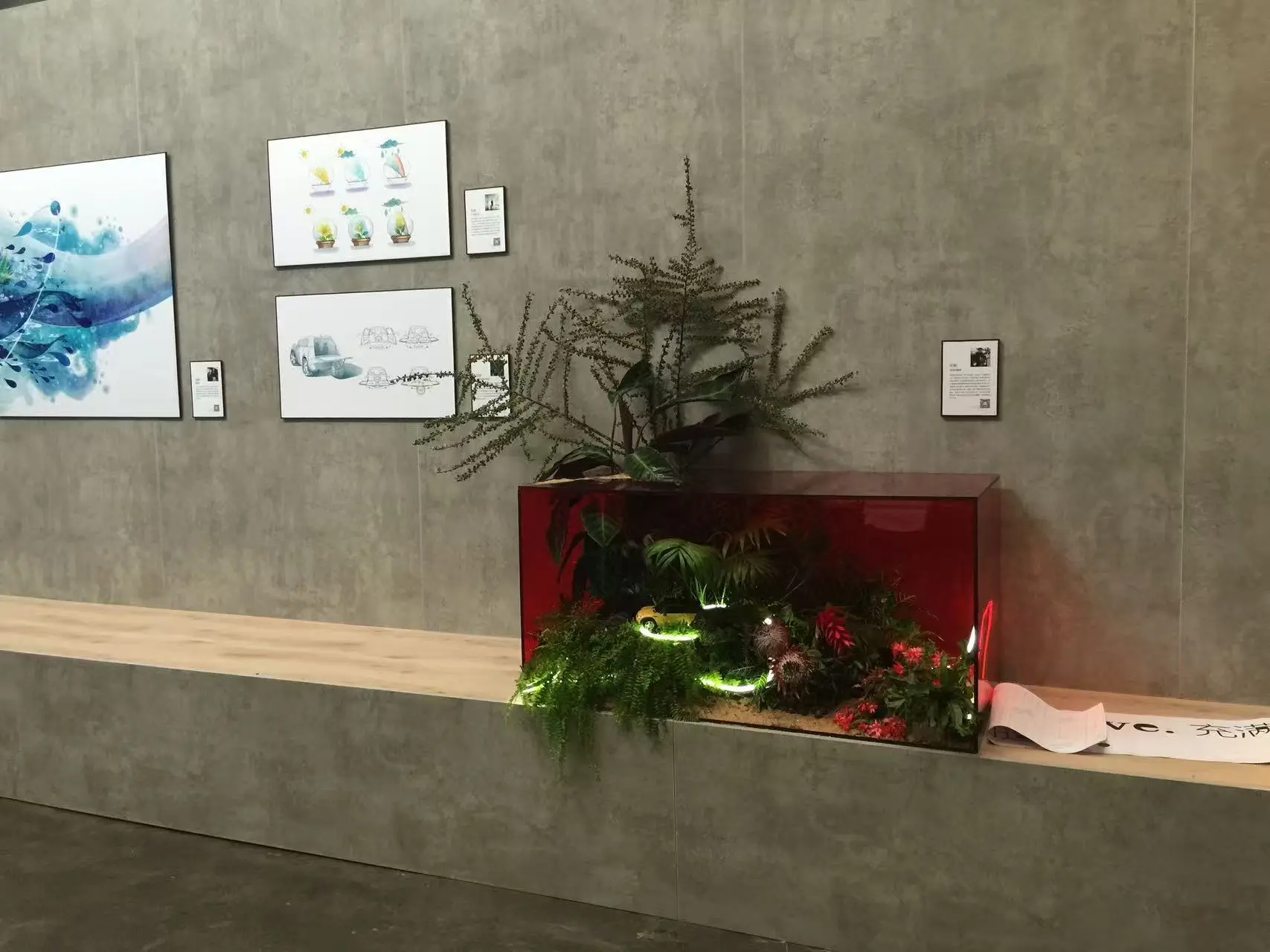
Installation with plant, image and light
04 / RELATED ARCHIVE FRAME / 关联档案画面Installation with plant, image and light植物、影像与光

Red illumination, image and plant produce an ecology of attention whose conditions change with viewpoint and duration.

红色光线、图像与植物生成一套随观看位置和持续时间变化的注意生态。

05

RESEARCH ARGUMENT

Internationalism Requires Translation

国际性需要翻译

How can a work cross borders without converting difference into a universal style?

作品如何跨越边界,同时不把差异转化为一种普遍风格?

STARTING POINT / 从这里开始

Music does not become universally transparent when words disappear. Meaning migrates into rhythm, timbre, gesture, instrumentation, venue and audience. International circulation is therefore situated translation: the work listens in another context and returns altered rather than unchanged.

语言消失并不会让音乐自动获得普遍透明性。意义转移到节奏、音色、动作、乐器、空间与听众之中。因此国际流通是一种在地翻译:作品进入另一语境倾听,并带着变化返回。

THE TENSION / 其中的张力

Celebrating hybridity can hide unequal access to institutions, stages and translation. Relation matters only when the frictions and power of circulation remain perceptible.

赞美混合性可能掩盖进入机构、舞台与翻译系统的不平等。只有当流通中的摩擦与权力保持可感时,关系才真正成立。

FROM OUR PRACTICE / 回到我们的实践

For us, being international begins with relation rather than a cosmetic global vocabulary. Editing and curating become forms of rhythmic translation.

对我们而言,国际性从关系开始,而不是套用一层表面化的全球词汇。剪辑与策展由此成为节奏的翻译。

IMAGE ARGUMENT / 图像论证04 IMAGES
Kong Hongwei / jazz
01 / RELATED ARCHIVE FRAME / 关联档案画面Kong Hongwei / jazz孔宏伟 / 爵士乐

International circulation is approached as translation: difference travels through rhythm instead of disappearing at the border.

国际流通在这里被理解为翻译:差异通过节奏移动,而不是在跨越边界时消失。

Stage reading archive
02 / RELATED ARCHIVE FRAME / 关联档案画面Stage reading archive舞台与声音

Shared reading makes voice collective: timing, hesitation and response become part of the work's live form.

共同朗读使声音获得集体性:节奏、迟疑与回应成为现场形式的一部分。

Every Artist Needs Music — selected source frame
03 / RELATED ARCHIVE FRAME / 关联档案画面Every Artist Needs Music — selected source frame孔宏伟 × 吴倩

This frame supports the research strand on music education, improvisation and how rhythm translates across disciplines.

该画面支持关于音乐教育、即兴,以及节奏如何跨学科翻译的研究线。

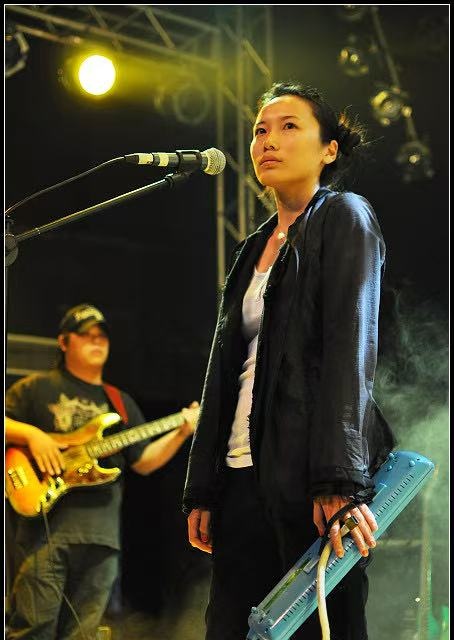
Live performance archive
04 / RELATED ARCHIVE FRAME / 关联档案画面Live performance archive现场表演

The close frame keeps the body, microphone and stage relation at the centre of the image.

近距离画面把身体、麦克风与舞台关系保留在图像中心。

06

RESEARCH ARGUMENT

Boredom Interrupts Compulsory Usefulness

无聊中断强制性的有用

Can unproductive time become a method for recovering attention?

非生产性时间能否成为重新获得注意力的方法?

STARTING POINT / 从这里开始

Boredom is treated as neither emptiness nor lifestyle branding. It is an unstable interval in which habitual demands briefly lose authority. The interruption does not guarantee art, but it creates conditions in which unnoticed relations, suppressed questions and the difficulty of being with oneself can surface.

无聊既不是空白,也不是生活方式标签,而是一段惯常要求暂时失去权威的不稳定间隙。这种中断不会自动产生艺术,却能让未被注意的关系、被压抑的问题,以及与自我相处的困难浮现。

THE TENSION / 其中的张力

Boredom can be privilege as well as refusal. Any artistic use of it must remain attentive to whose time is protected, whose labour is invisible and who is permitted to disengage.

无聊既可能是拒绝,也可能是一种特权。任何艺术性使用都必须追问:谁的时间受到保护,谁的劳动被隐去,谁有权暂时退出。

FROM OUR PRACTICE / 回到我们的实践

For us, WU—LIAO names a simple practice: suspend immediate usefulness, stay with an unfinished question and let attention find another direction.

对我们而言,“无不吴聊”指向一种简单的实践:暂停即时用途,在未完成的问题里多停一会,让注意力找到另一个方向。

IMAGE ARGUMENT / 图像论证04 IMAGES
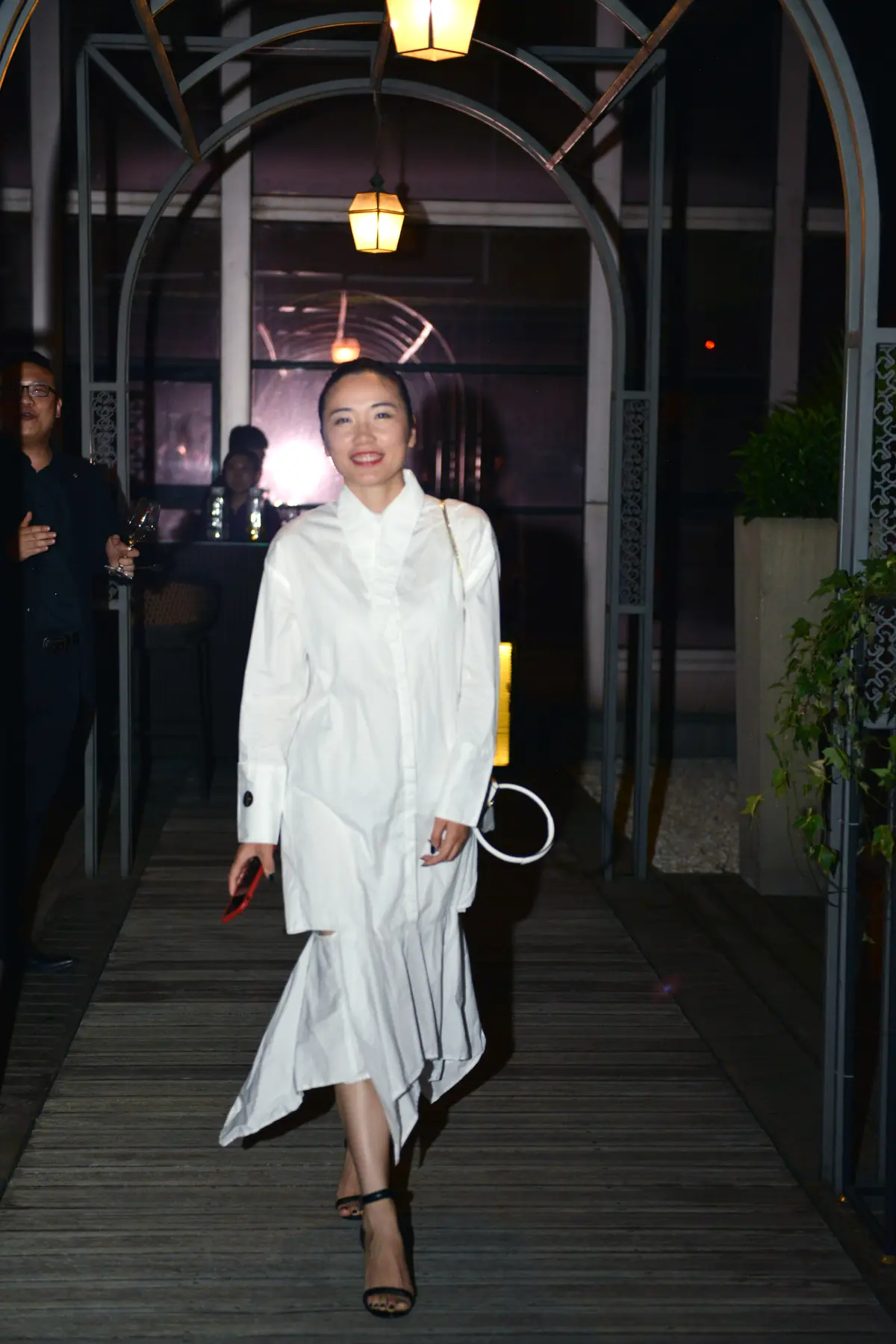
Night performance or field archive
01 / RELATED ARCHIVE FRAME / 关联档案画面Night performance or field archive夜间现场

The full-body frame holds posture, costume and exposure against the darkness of the site.

全身画面把姿态、服装与身体暴露留在夜间现场的黑暗之中。

Field conversation beside a lake
02 / RELATED ARCHIVE FRAME / 关联档案画面Field conversation beside a lake田野与湖泊

Distance, weather and the lake enter the composition as active conditions of the encounter.

距离、天气与湖面作为相遇的主动条件进入构图。

Encounter with a field participant
03 / RELATED ARCHIVE FRAME / 关联档案画面Encounter with a field participant人物与相遇

The image holds a moment of proximity between the camera, the place and the person encountered there.

画面保留镜头、地点与现场相遇者之间的一段接近。

Live performance archive
04 / RELATED ARCHIVE FRAME / 关联档案画面Live performance archive现场表演

The close frame keeps the body, microphone and stage relation at the centre of the image.

近距离画面把身体、麦克风与舞台关系保留在图像中心。

07

RESEARCH ARGUMENT

Education Begins Before Judgement

教育开始于判断之前

Can art education cultivate perceptual access instead of reproducing authorised taste?

艺术教育能否建立感知入口,而不是复制被授权的品味?

STARTING POINT / 从这里开始

The education records repeatedly return to learning how to perceive: rhythm before genre, material behaviour before authority, childhood attention before disciplinary correctness. Pedagogy is understood as arranging conditions for perception rather than transmitting a finished cultural hierarchy.

教育资料反复回到“如何感知”:先于类型的节奏、先于权威的材料行为,以及先于学科正确性的童年注意。教育被理解为安排感知条件,而不是传递完成的文化等级。

THE TENSION / 其中的张力

Rejecting authority does not mean abandoning rigor. The question is whether rigor can be made reflexive—able to disclose where its standards come from and whom they exclude.

质疑权威并不等于放弃严谨。问题在于,严谨是否能够反身地说明自身标准从何而来,又排除了谁。

FROM OUR PRACTICE / 回到我们的实践

We often begin with an ordinary question. It lowers the threshold of entry without making the problem smaller.

我们常从一个日常问题开始。它降低进入的门槛,却不缩小问题本身。

IMAGE ARGUMENT / 图像论证04 IMAGES
Collective exhibition encounter
01 / RELATED ARCHIVE FRAME / 关联档案画面Collective exhibition encounter展览与共同体

The collective pose records the social network around an exhibition: artists, visitors, collaborators and the room they briefly share.

集体合影记录展览周围的社会网络:艺术家、观众、合作者,以及他们短暂共享的空间。

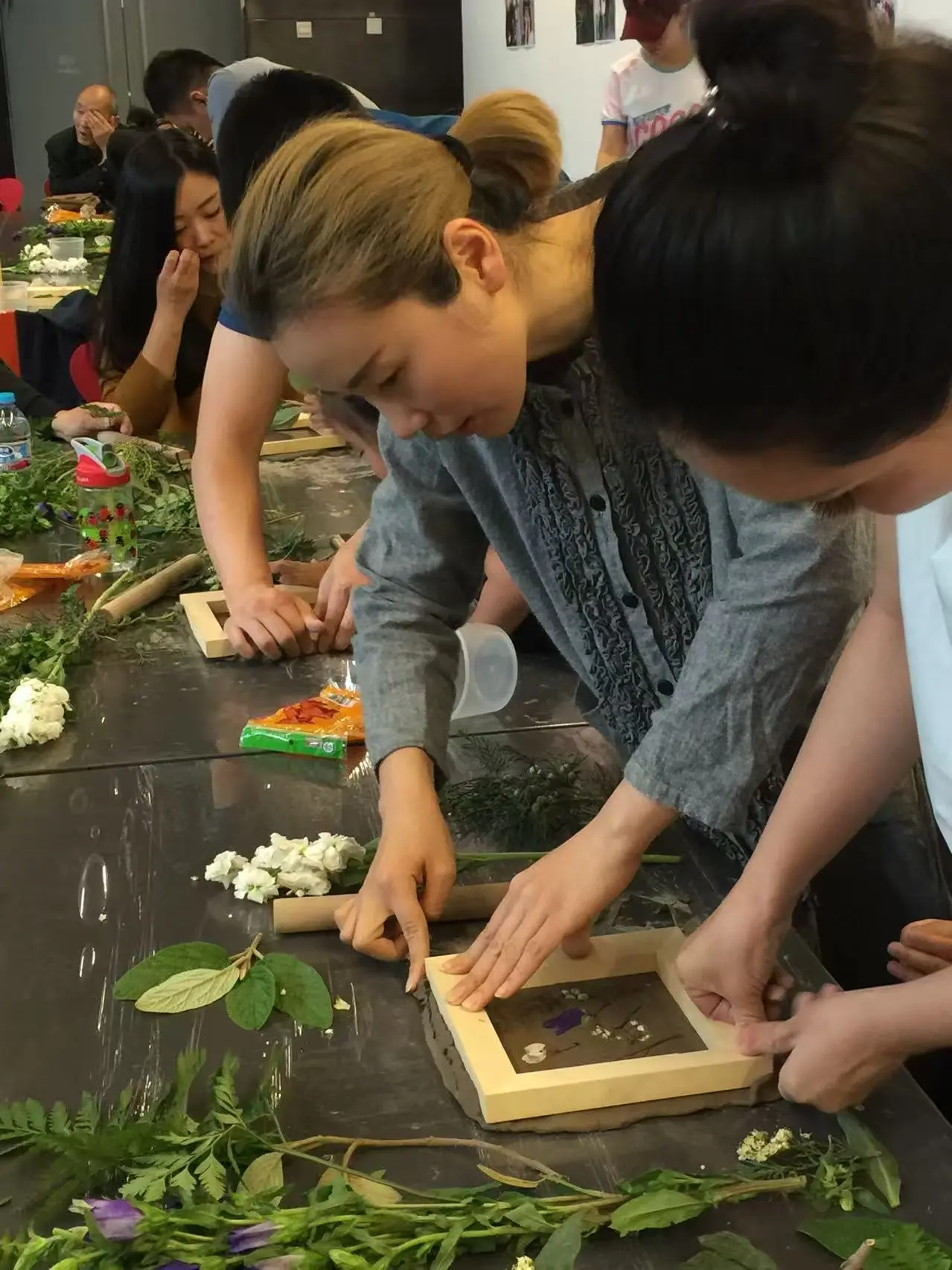
Participatory workshop
02 / RELATED ARCHIVE FRAME / 关联档案画面Participatory workshop参与式工作坊

Hands, material and shared table make participation visible as a negotiated process of making.

手、材料与共享桌面使参与显现为协商性的制作过程。

Voice in public space
03 / RELATED ARCHIVE FRAME / 关联档案画面Voice in public space声音与公共空间

The speaking situation locates voice among listeners, plants and an informal environment rather than on a separated stage.

发言现场把声音置于听众、植物与非正式环境之间,而不是隔离的舞台上。

WU—LIAO conversation with Fan Xueyi
04 / RELATED ARCHIVE FRAME / 关联档案画面WU—LIAO conversation with Fan Xueyi范学宜 / 对话帧

The outdoor setting places childhood memory and ecological attention inside a lived environment rather than an abstract topic.

户外现场把童年记忆与生态注意放回具体生活环境,而不是停留在抽象议题中。

08

RESEARCH ARGUMENT

The Face Is a Platform Event

面孔是一场平台事件

What does a portrait record when visibility is accelerated, measured and repeatedly replaced?

当可见性被加速、计量并不断替换时,肖像究竟记录什么?

STARTING POINT / 从这里开始

A contemporary face is made not only by biology or individual expression but by cameras, styling, interface crops, circulation speeds and social expectations. The interview portrait can therefore be read as a temporal document of the conditions that make a speaker publicly legible.

当代面孔不仅由生理或个人表情构成,也由镜头、造型、界面裁切、传播速度与社会期待共同生成。因此,访谈肖像可以成为时间文献,记录说话者得以被公共识别的条件。

THE TENSION / 其中的张力

A clean frame can restore visual attention, but it can also detach an image from the conditions in which it first circulated. We keep both in view: the frame and the situation around it.

纯画面能够恢复视觉注意,也可能使图像脱离最初流通的语境。我们同时保留两者:画面本身,以及画面周围的传播现场。

FROM OUR PRACTICE / 回到我们的实践

We understand hosting and portraiture as one action: composing a situation in which another person can appear without being reduced to a promotional likeness.

我们把主持与肖像理解为同一个动作:组织一种让他者显现、又不被缩减为宣传形象的情境。

IMAGE ARGUMENT / 图像论证04 IMAGES
Exhibition network
01 / RELATED ARCHIVE FRAME / 关联档案画面Exhibition network展览关系

The group and the painted landscape occupy one visual field, allowing social presence to become part of exhibition meaning.

人物群体与绘画景观处于同一视觉场,使社会性在场成为展览意义的一部分。

Long-form interview production
02 / RELATED ARCHIVE FRAME / 关联档案画面Long-form interview production长谈现场

Camera, interviewer and participant remain visible as a triangular structure of attention.

镜头、采访者与受访者保持可见,形成注意力的三角结构。

Interview inside a gallery
03 / RELATED ARCHIVE FRAME / 关联档案画面Interview inside a gallery展览访谈

The interview operates inside the exhibition rather than after it, joining mediation and display in one situation.

访谈发生在展览内部而不是展览之后,使传播与陈列进入同一现场。

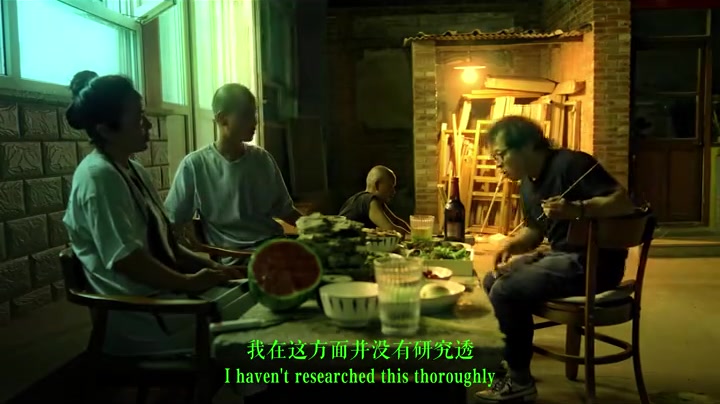
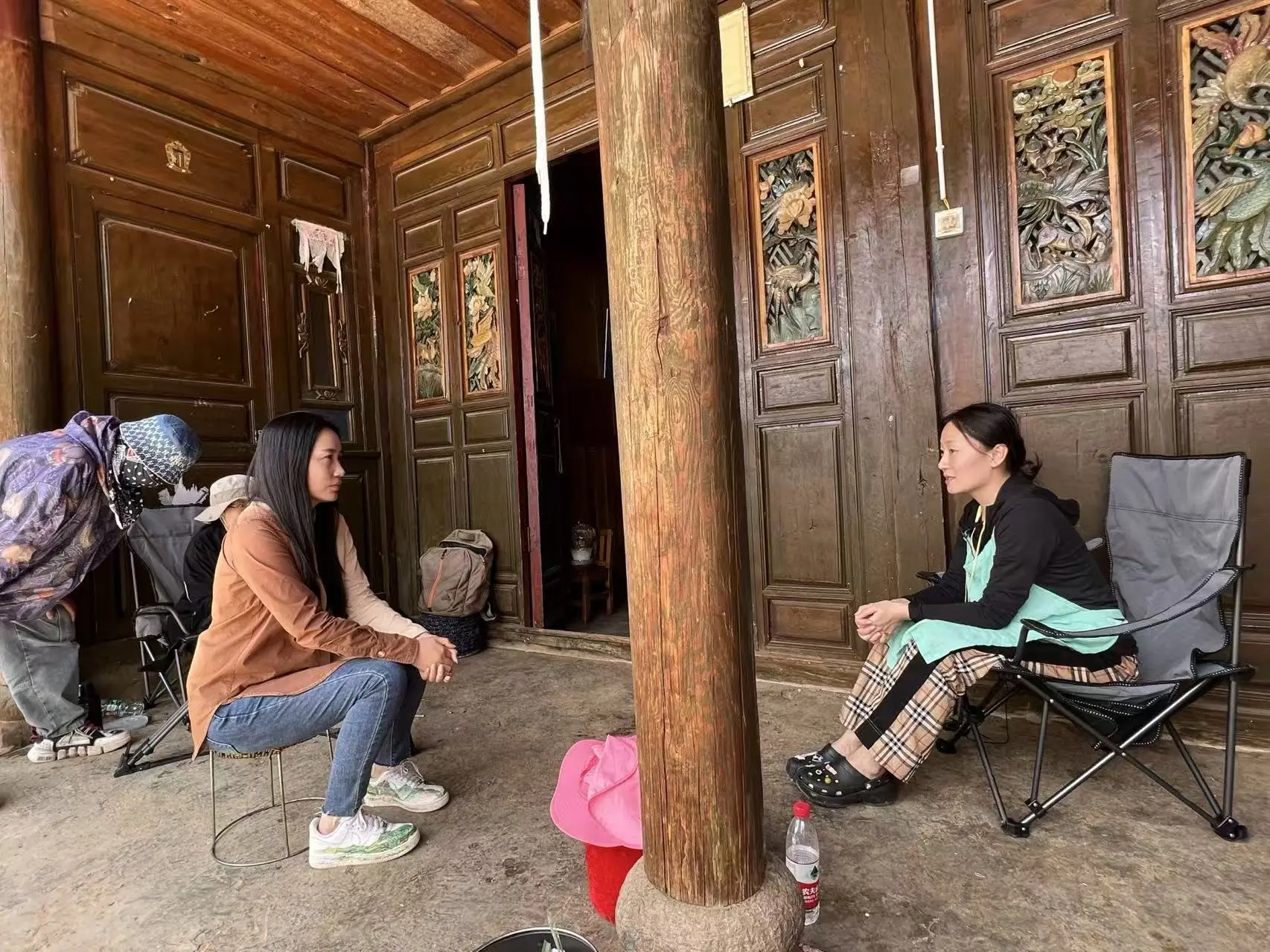
Interior field conversation
04 / RELATED ARCHIVE FRAME / 关联档案画面Interior field conversation田野制作 / 02

The domestic setting keeps architecture, everyday objects and hospitality inside the oral-history situation.

室内现场让建筑、日常物件与待客关系共同进入口述史情境。

09

RESEARCH ARGUMENT

A Site Is an Active Historical Relation

地点是活跃的历史关系

How can landscape and architecture enter an argument without becoming picturesque evidence?

景观与建筑如何进入论证,而不沦为风景化证据?

STARTING POINT / 从这里开始

Site is treated as an arrangement of access, memory, labour, weather, economy and movement. The ‘old house’ is not a stable heritage object; it is a diachronic structure in which different pasts and futures occupy the same material at unequal speeds.

地点被理解为进入权限、记忆、劳动、天气、经济与移动的组合。“老房子”不是稳定遗产物,而是一种历时结构:不同的过去与未来以不均衡速度共同占据同一材料。

THE TENSION / 其中的张力

Place-based work can aestheticise rural life or turn memory into cultural capital. We therefore keep production, hospitality and economic change inside the image rather than treating them as neutral background.

在地工作可能把乡村生活审美化,也可能把记忆转化为文化资本。因此,我们把制作条件、民宿业态与经济变化留在影像内部,而不是把它们当作中性背景。

FROM OUR PRACTICE / 回到我们的实践

In our production work, access, trust, timing and the distribution of resources decide which histories can enter the frame.

在我们的制片工作中,进入、信任、时间与资源分配,共同决定哪些历史能够进入画面。

IMAGE ARGUMENT / 图像论证04 IMAGES
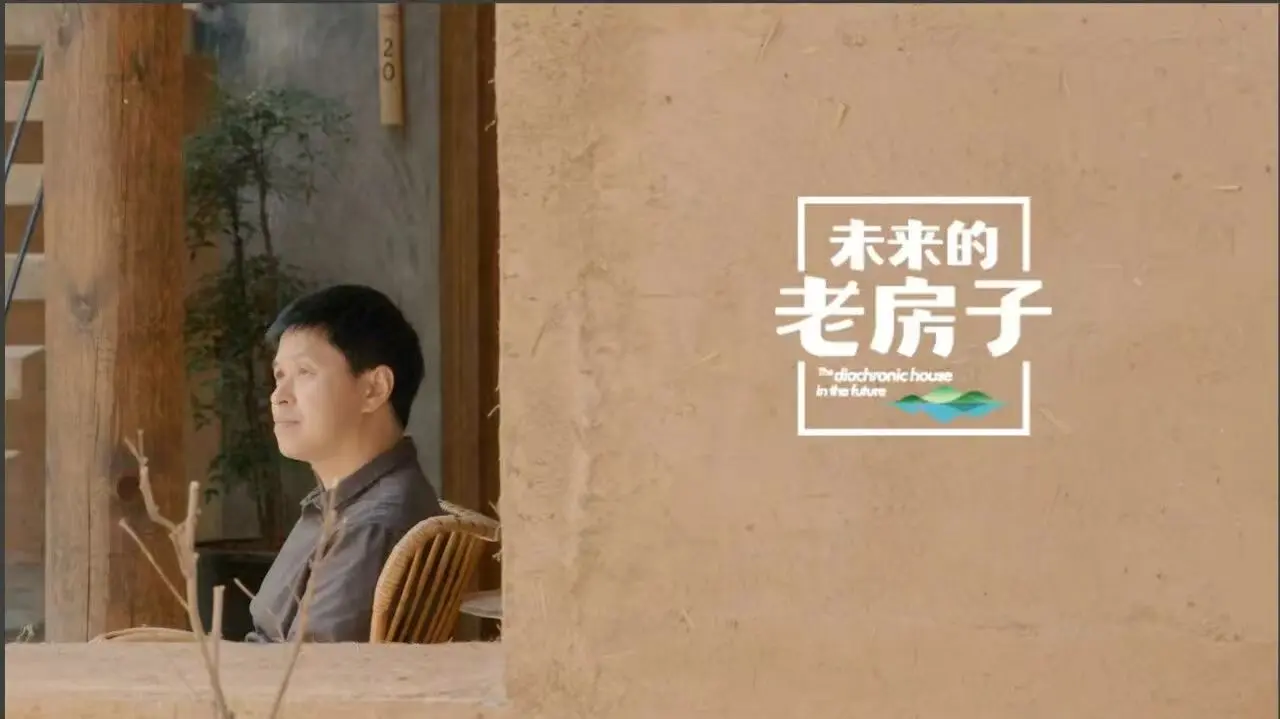
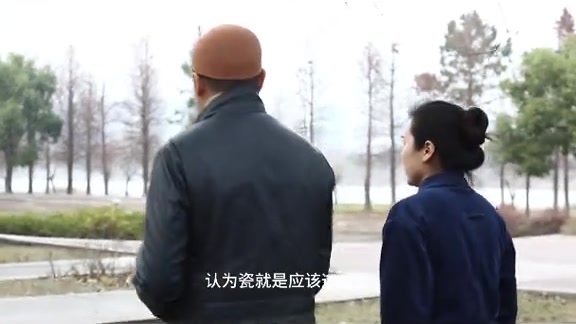
Film frame from The Diachronic House in the Future
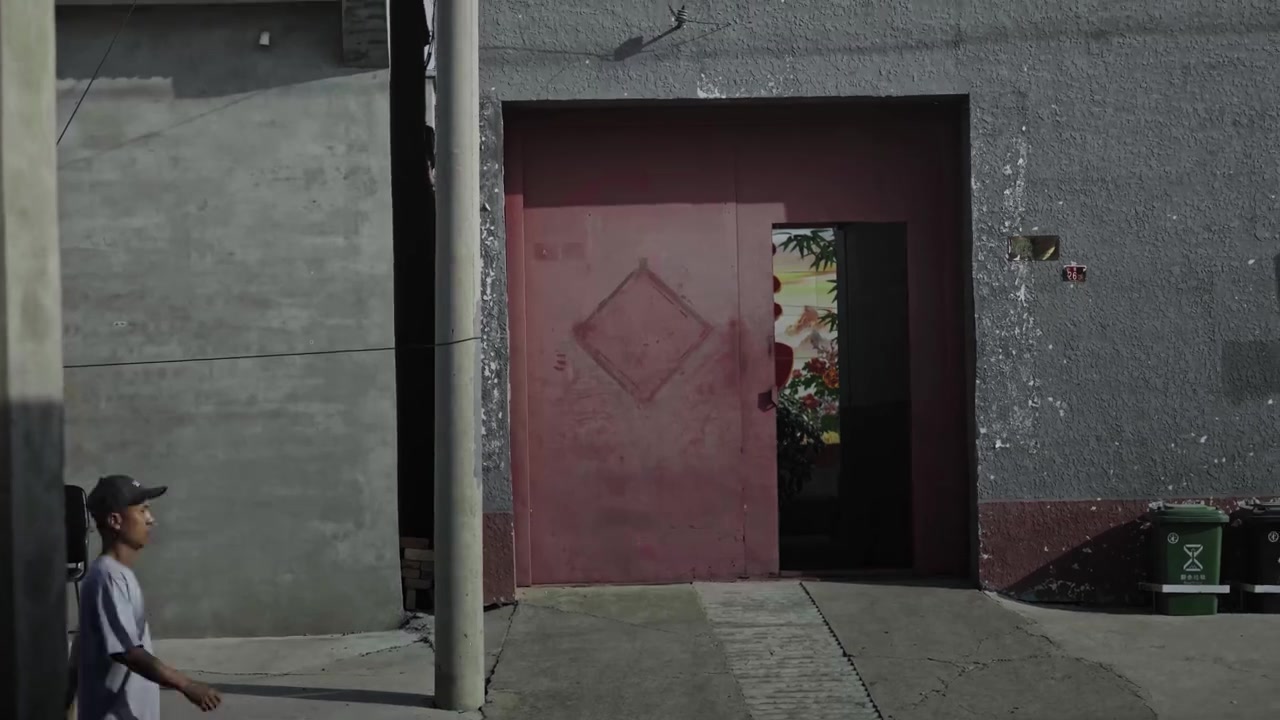
01 / RELATED ARCHIVE FRAME / 关联档案画面Film frame from The Diachronic House in the Future影像帧

The preserved moving-image frame situates inherited architecture within contemporary inhabitation rather than presenting the house as an isolated monument.

现存影片画面把传统建筑放入当代居住之中,而不是把房屋呈现为孤立纪念物。

Field conversation beside a lake
02 / RELATED ARCHIVE FRAME / 关联档案画面Field conversation beside a lake田野与湖泊

Distance, weather and the lake enter the composition as active conditions of the encounter.

距离、天气与湖面作为相遇的主动条件进入构图。

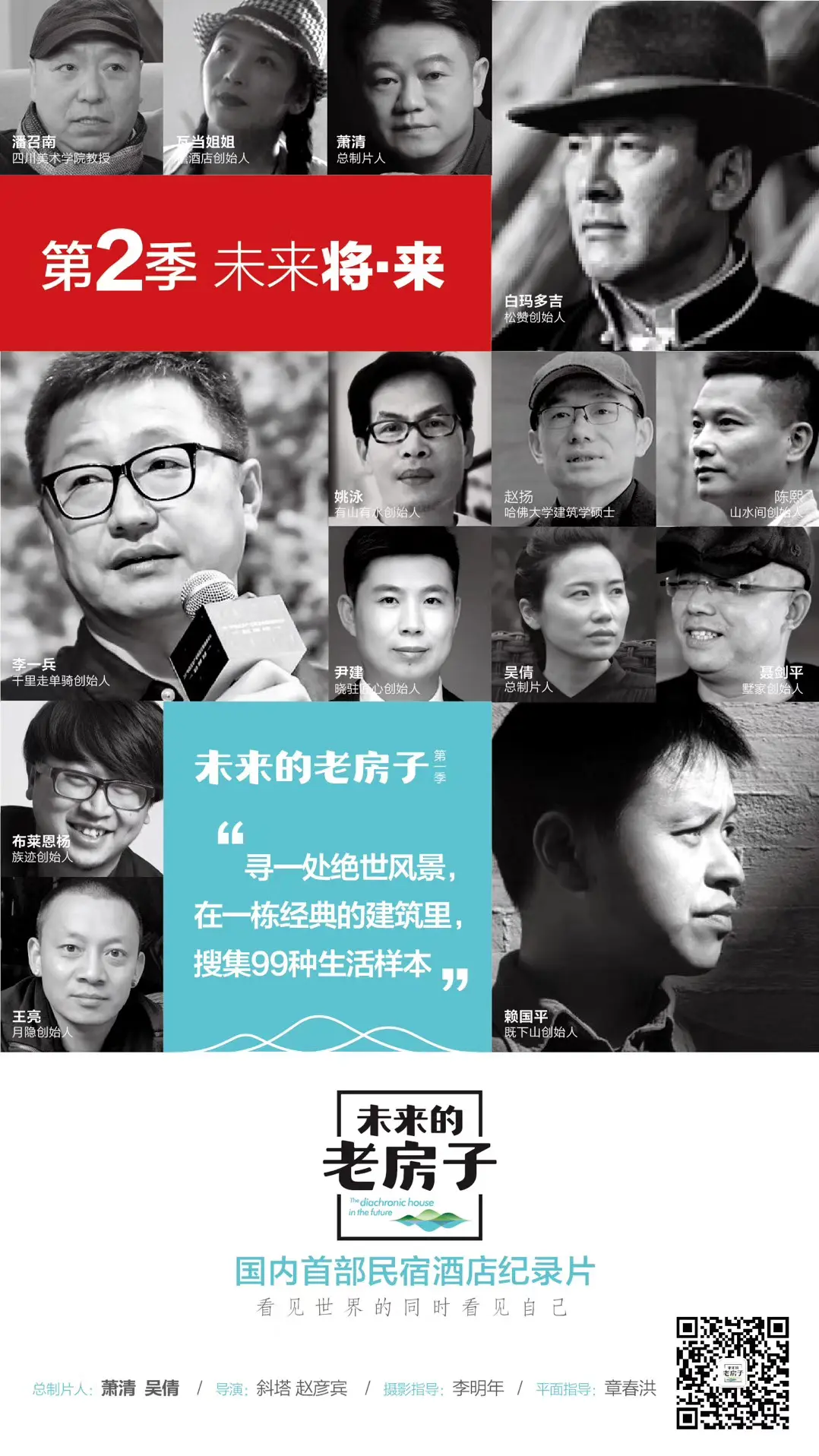
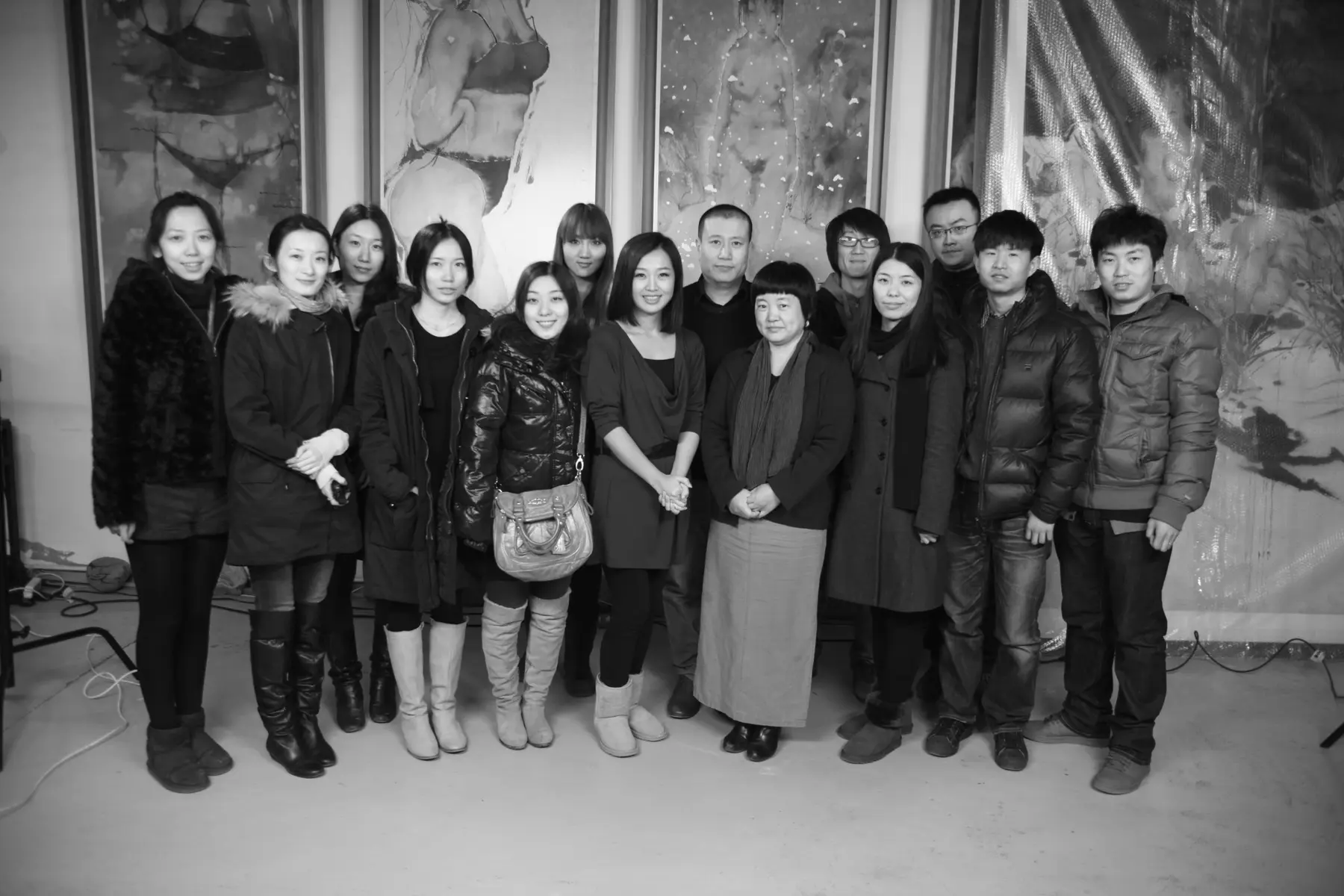
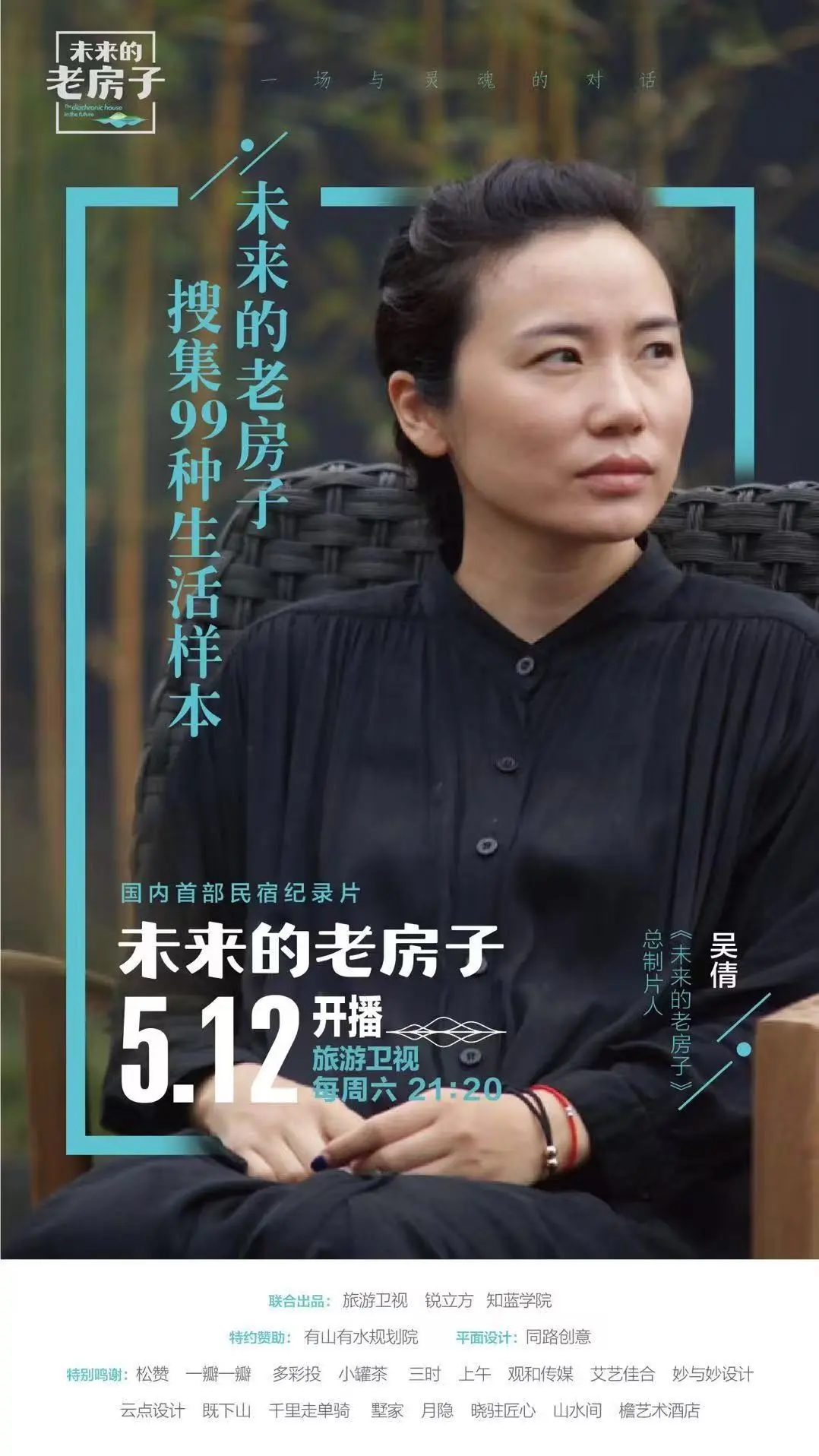
Contributors to the documentary series
03 / RELATED ARCHIVE FRAME / 关联档案画面Contributors to the documentary series演职人员

The contributor poster preserves the collective structure of the series and resists reducing production to a single visible author.

主创海报保存了系列的集体生产结构,避免把制作缩减为单一可见作者。

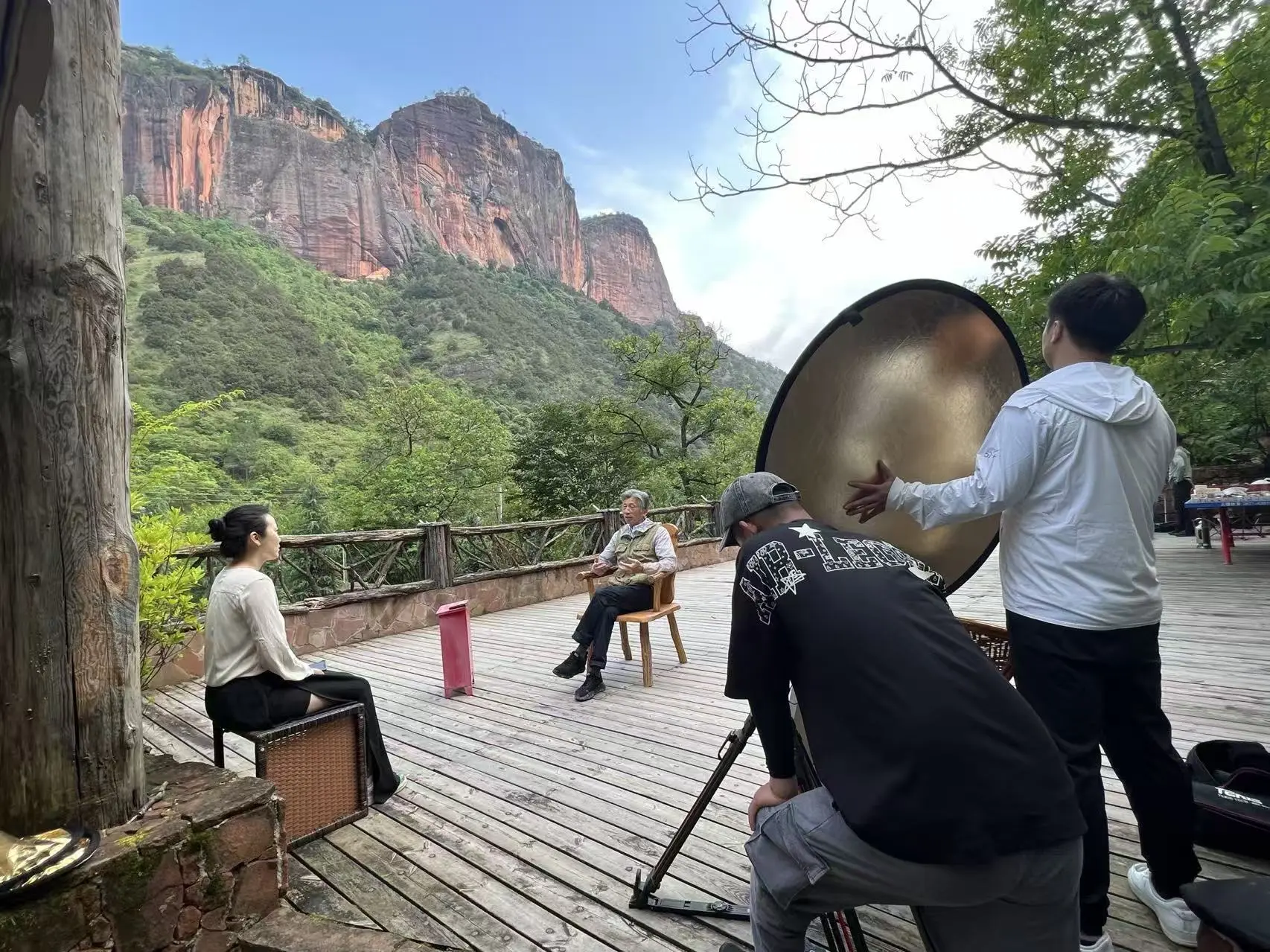
Location-production record in a mountain landscape
04 / RELATED ARCHIVE FRAME / 关联档案画面Location-production record in a mountain landscape田野制作 / 01

Camera placement and terrain show that access and technical position are part of what the image can know.

镜头位置与地形说明:进入条件与技术位置共同决定图像能够知道什么。

10

RESEARCH ARGUMENT

Production Is Where the Work Thinks

制片是作品进行思考的地方

Can logistics, care and infrastructure carry an artistic argument?

后勤、照料与基础设施能够承载艺术论证吗?

STARTING POINT / 从这里开始

Production distributes time, risk, visibility, access and attention. A microphone placement changes which sound becomes evidence; a schedule changes whose time is respected; a budget changes which distance can be crossed. These are aesthetic and epistemic decisions, not neutral support.

制片分配时间、风险、可见性、进入权与注意力。麦克风位置改变哪些声音成为证据;日程改变谁的时间受到尊重;预算改变哪些距离能够跨越。这些是审美与知识决定,而非中性支持。

THE TENSION / 其中的张力

Making invisible labour visible does not turn every supporting role into authorship. It asks us to notice how apparently secondary work changes what can be seen, heard and sustained.

让隐形劳动可见,并不意味着把所有支持角色都转化为作者,而是促使我们注意:那些看似次要的工作,如何改变可见、可听与可持续之物。

FROM OUR PRACTICE / 回到我们的实践

Producing, curating, interviewing and making art are not identical roles. What they share for us is the work of preparing the conditions in which an encounter can happen and continue.

制片、策展、访谈与艺术创作并不是同一种角色。对我们而言,它们共享的工作,是为一次相遇的发生与继续准备条件。

IMAGE ARGUMENT / 图像论证04 IMAGES
Voice in public space
01 / RELATED ARCHIVE FRAME / 关联档案画面Voice in public space声音与公共空间

The speaking situation locates voice among listeners, plants and an informal environment rather than on a separated stage.

发言现场把声音置于听众、植物与非正式环境之间,而不是隔离的舞台上。

Collective studio situation
02 / RELATED ARCHIVE FRAME / 关联档案画面Collective studio situation工作室档案

The group record keeps the collective presence of a studio situation: bodies, tools, conversation and shared time.

这张集体资料保留了工作室现场的共同在场:身体、工具、对话与共享时间。

Sound production setup
03 / RELATED ARCHIVE FRAME / 关联档案画面Sound production setup声音制作

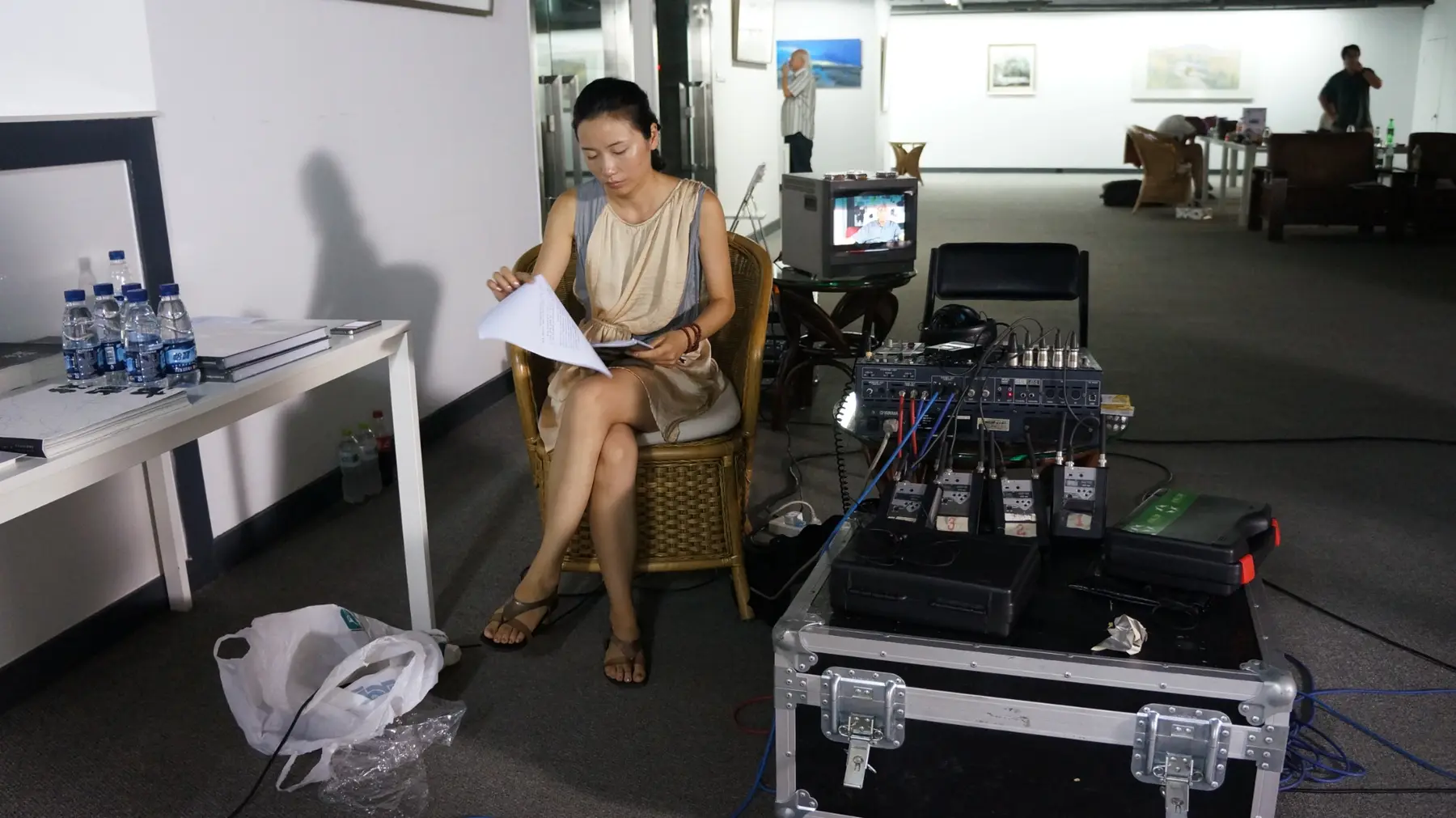
Mixer, monitor, cables and seating reveal sound as an arranged field of audibility rather than invisible support.

调音台、监视器、线缆与座位揭示声音是被编排的可听场,而非隐形支持。

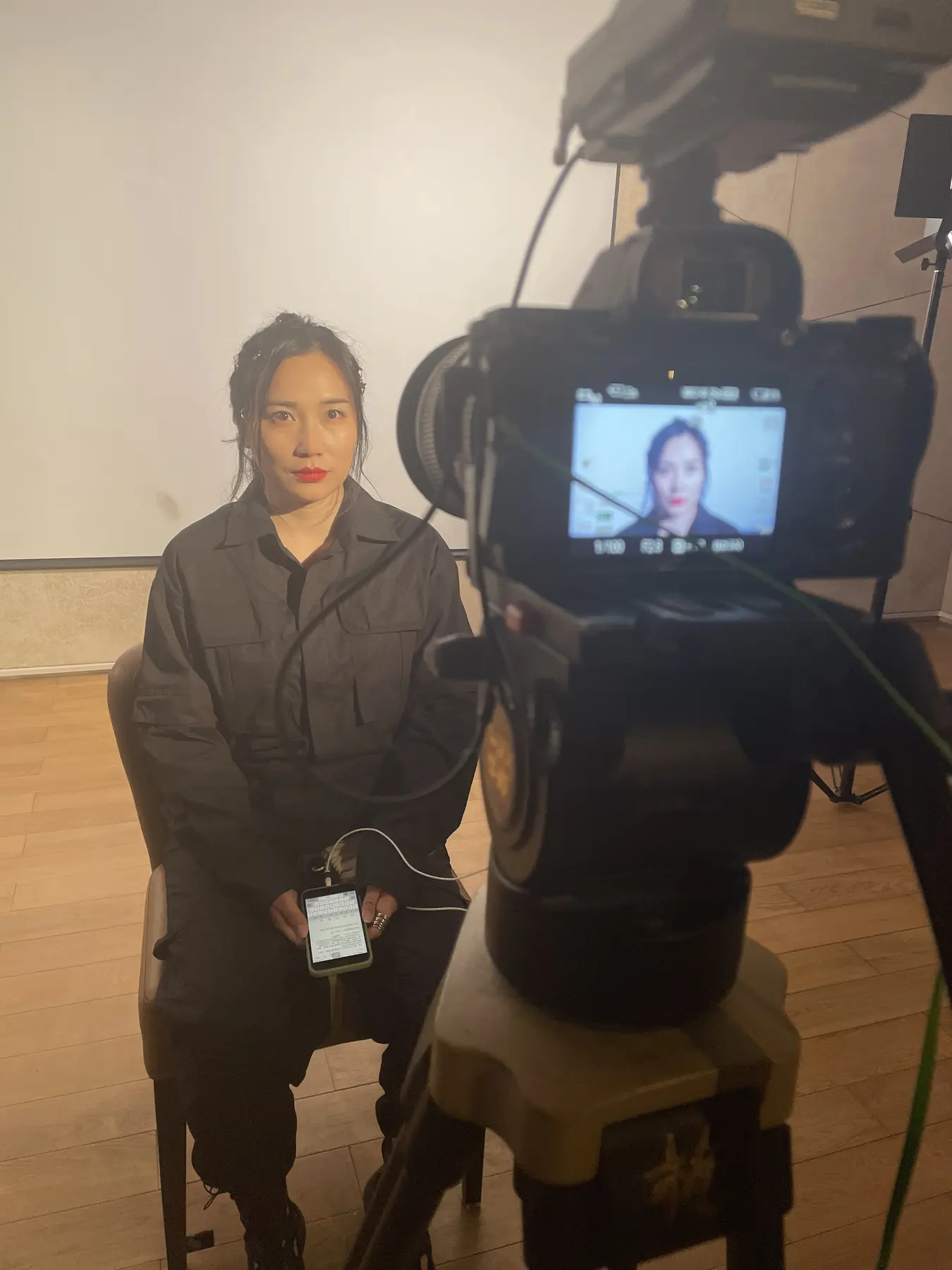
Wu Qian behind the camera
04 / RELATED ARCHIVE FRAME / 关联档案画面Wu Qian behind the camera镜头与见证

The visible recording apparatus prevents the field image from pretending to be an unmediated encounter.

可见的记录装置阻止田野图像把相遇伪装成未经媒介化的真实。

READER 01 / 读本 01

Books and essays we read alongside the work

与影像、对话和项目一起阅读的书与文章

01

Conversation and Public Knowledge

对话与公共知识

Tools for analysing dialogue, participation, situated speech and the unequal distribution of public voice.

用于分析对话、参与、在地言说与公共声音不均衡分配的工具。

IMAGES BESIDE THE READER / 与读本并置的图像04 IMAGES
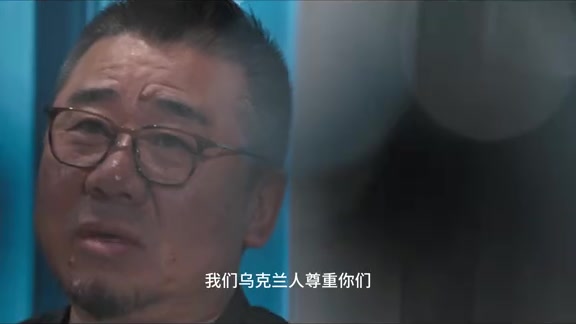
WU—LIAO conversation with Bai Ming
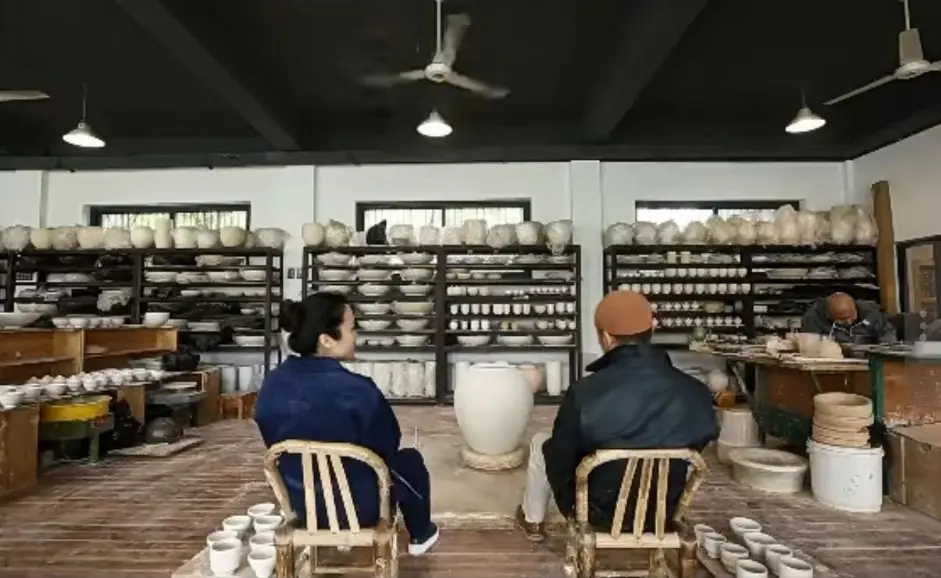
01 / VISUAL REFERENCE / 视觉参照WU—LIAO conversation with Bai Ming白明 / 对话帧

A conversation frame that anchors the material-authority strand: ceramics, expertise and who is permitted to name the new.

该对话画面锚定“材料与权威”研究线:陶瓷、专业知识,以及谁有权命名新事物。

Long-form interview production
02 / VISUAL REFERENCE / 视觉参照Long-form interview production长谈现场

Camera, interviewer and participant remain visible as a triangular structure of attention.

镜头、采访者与受访者保持可见,形成注意力的三角结构。

WU—LIAO conversation with Fan Xueyi
03 / VISUAL REFERENCE / 视觉参照WU—LIAO conversation with Fan Xueyi范学宜 / 对话帧

The outdoor setting places childhood memory and ecological attention inside a lived environment rather than an abstract topic.

户外现场把童年记忆与生态注意放回具体生活环境,而不是停留在抽象议题中。

Conversation in an open landscape
04 / VISUAL REFERENCE / 视觉参照Conversation in an open landscape对话与地平线

The upward viewpoint makes exposure to weather and horizon visible, shifting dialogue away from a controlled studio situation.

仰视视角使天气与地平线的暴露变得可见,让对话离开受控的工作室环境。

  1. Grant H. Kester, Conversation Pieces: Community and Communication in Modern Art, University of California Press, 2013.Art theory · Contextual readingEstablishes dialogical art as a practice of listening and negotiated meaning.把对话性艺术理解为倾听与协商意义的实践。
  2. Mikhail Bakhtin, The Dialogic Imagination: Four Essays, University of Texas Press, 1981.Literary theory · Contextual readingSupplies a vocabulary for polyphony, unfinished meaning and speech shaped by other voices.为复调、未完成意义与被他者声音塑造的言说提供词汇。
  3. Paulo Freire, Pedagogy of the Oppressed, Bloomsbury Academic, 50th anniversary edition, 2018.Critical pedagogy · Contextual readingFrames dialogue as co-investigation rather than the transfer of finished knowledge.把对话理解为共同研究,而不是完成知识的单向传递。
  4. Claire Bishop, Artificial Hells: Participatory Art and the Politics of Spectatorship, Verso, 2012.Art history · Contextual readingComplicates the assumption that participation is automatically emancipatory.质疑参与天然具有解放性的假设。
  5. Tom Finkelpearl, Dialogues in Public Art, MIT Press, 2000.Public art · Contextual readingPlaces artists, administrators, communities and conflict within one public-art conversation.把艺术家、行政系统、社群与冲突置于同一公共艺术对话中。
  6. Trinh T. Minh-ha, Elsewhere, Within Here: Immigration, Refugeeism and the Boundary Event, Routledge, 2011.Critical theory · Contextual readingSupports a speaking-nearby method that resists converting another person into transparent information.支持“在旁言说”的方法,避免把他者转化为透明信息。
02

Ecology, Instinct and Adaptation

生态、本能与适应

Readings that treat organisms and environments as co-produced, and resilience as an ethically unstable demand.

把生命体与环境理解为共同生成,并把韧性视为伦理上不稳定的要求。

IMAGES BESIDE THE READER / 与读本并置的图像04 IMAGES
Spatial installation study
01 / VISUAL REFERENCE / 视觉参照Spatial installation study空间研究

The drawing functions as a proposition for relations among plant, container, frame and viewer rather than a decorative sketch.

图纸不是装饰性草图,而是关于植物、容器、框架与观看者关系的空间命题。

Encounter with a field participant
02 / VISUAL REFERENCE / 视觉参照Encounter with a field participant人物与相遇

The image holds a moment of proximity between the camera, the place and the person encountered there.

画面保留镜头、地点与现场相遇者之间的一段接近。

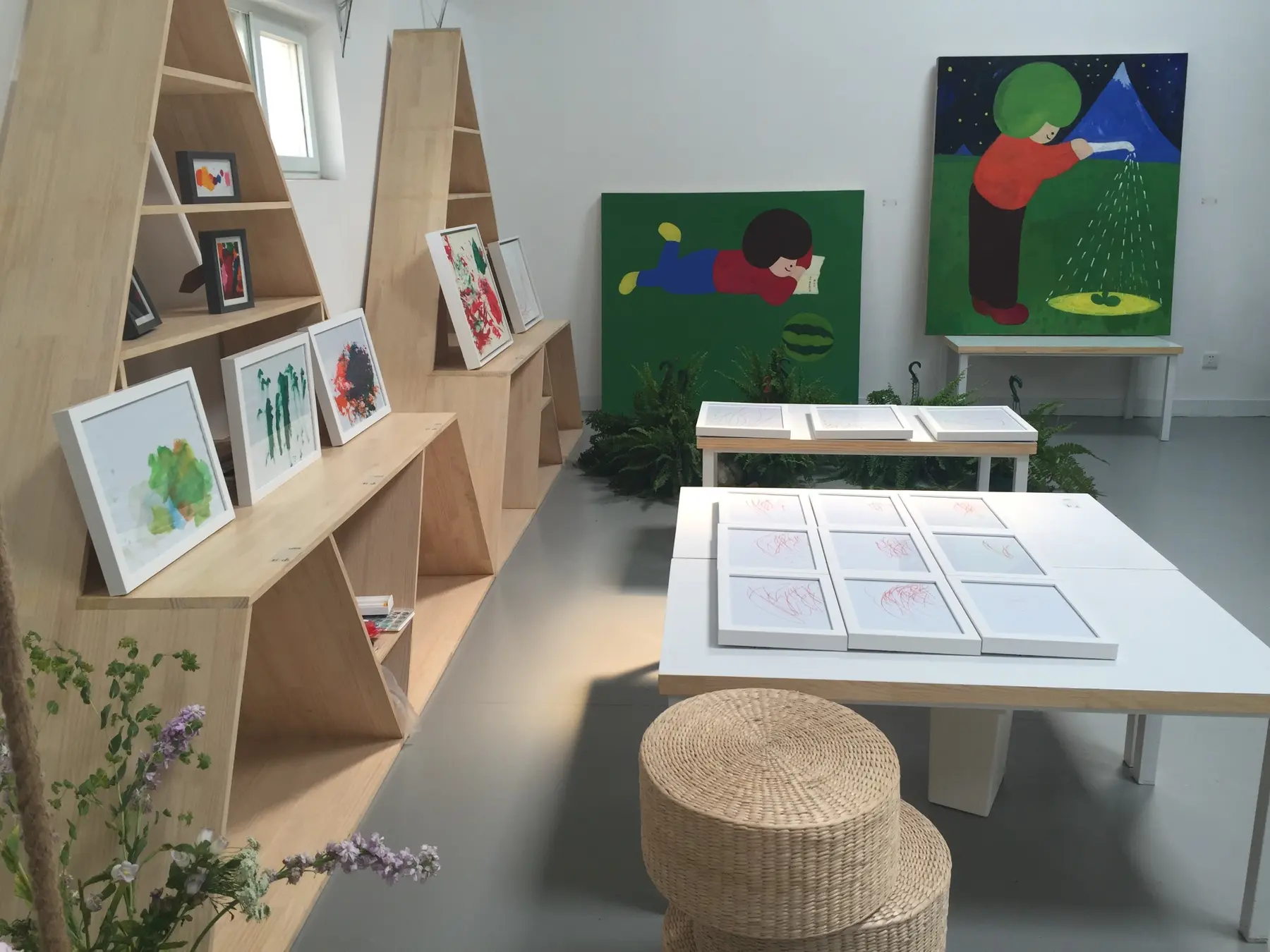
Works and reading material in a display room
03 / VISUAL REFERENCE / 视觉参照Works and reading material in a display room作品与空间

The room links artworks, publications and furniture as a small ecology of looking, reading and staying.

空间把作品、出版物与家具连接成观看、阅读与停留的小型生态。

Plant Instinct — selected source frame
04 / VISUAL REFERENCE / 视觉参照Plant Instinct — selected source frame植物的本能 / 资料帧

The plant record opens an ecological argument about situated intelligence, adaptation and the limits of human-centred knowledge.

“植物的本能”资料开启关于在地智能、适应以及人类中心知识边界的生态论证。

  1. Anna Lowenhaupt Tsing, The Mushroom at the End of the World, Princeton University Press, 2015.Anthropology · Contextual readingReads collaborative survival inside landscapes already damaged by capitalist extraction.讨论资本开采已造成损害的景观中,协作性生存如何发生。
  2. Georges Canguilhem, Knowledge of Life, Fordham University Press, 2008.Philosophy of biology · Contextual readingTreats life as an active relation that establishes norms within a milieu.把生命理解为在环境中主动建立规范的关系。
  3. Donna J. Haraway, Staying with the Trouble, Duke University Press, 2016.Science studies · Contextual readingOffers situated response and multispecies relation instead of fantasies of technological rescue.以在地回应和多物种关系替代技术拯救幻想。
  4. Robin Wall Kimmerer, Braiding Sweetgrass, Milkweed Editions, 2013.Ecological writing · Contextual readingConnects botanical knowledge, reciprocity and Indigenous modes of attention.连接植物学知识、互惠与原住民注意方式。
  5. Tim Ingold, The Perception of the Environment, Routledge, 2000.Anthropology · Contextual readingUnderstands perception and skill as movement within environmental relations.把感知与技艺理解为环境关系中的移动。
  6. Isabelle Stengers, In Catastrophic Times: Resisting the Coming Barbarism, Open Humanities Press, 2015.Political ecology · Contextual readingQuestions resilience narratives that ask subjects to adjust without changing destructive systems.质疑要求主体适应、却不改变破坏性系统的韧性叙事。
03

Mind, Body and Situated Consciousness

心智、身体与在地意识

Sources for holding embodied experience, cognition and first-person description in a rigorous but unresolved relation.

在严谨而未决的关系中并置身体经验、认知与第一人称描述。

IMAGES BESIDE THE READER / 与读本并置的图像04 IMAGES
Night performance or field archive
01 / VISUAL REFERENCE / 视觉参照Night performance or field archive夜间现场

The full-body frame holds posture, costume and exposure against the darkness of the site.

全身画面把姿态、服装与身体暴露留在夜间现场的黑暗之中。

How Do We Use the Heart? — selected source frame
02 / VISUAL REFERENCE / 视觉参照How Do We Use the Heart? — selected source frame孙逊 / 心与脑

The selected record stages heart and brain as working metaphors for embodied attention rather than anatomical conclusions.

重点资料把“心/脑”作为具身注意的工作隐喻,而不是解剖学结论。

Live performance archive
03 / VISUAL REFERENCE / 视觉参照Live performance archive现场表演

The close frame keeps the body, microphone and stage relation at the centre of the image.

近距离画面把身体、麦克风与舞台关系保留在图像中心。

Encounter with a field participant
04 / VISUAL REFERENCE / 视觉参照Encounter with a field participant人物与相遇

The image holds a moment of proximity between the camera, the place and the person encountered there.

画面保留镜头、地点与现场相遇者之间的一段接近。

  1. Francisco J. Varela, Evan Thompson and Eleanor Rosch, The Embodied Mind, MIT Press, revised edition, 2016.Cognitive science · Contextual readingConnects enactive cognition with lived experience and contemplative practice.连接生成认知、生活经验与观照实践。
  2. Maurice Merleau-Ponty, Phenomenology of Perception, Routledge, 2012.Phenomenology · Contextual readingPositions the lived body as the condition through which a world becomes perceptible.把生活身体置为世界得以被感知的条件。
  3. Alva Noë, Action in Perception, MIT Press, 2004.Philosophy of mind · Contextual readingArgues that perception depends on embodied capacities for action rather than passive inner representation.论证感知依赖身体行动能力,而不是被动的内在表征。
  4. Evan Thompson, Mind in Life, Harvard University Press, 2007.Cognitive science · Contextual readingRelates consciousness to autonomous, embodied and living organisation.把意识连接到自主、具身与生命组织。
  5. Erin Manning, Relationscapes: Movement, Art, Philosophy, MIT Press, 2009.Art and philosophy · Contextual readingMakes movement and relation prior to a fixed, self-contained subject.把运动与关系置于固定、自足主体之前。
  6. Shaun Gallagher, How the Body Shapes the Mind, Oxford University Press, 2005.Philosophy of mind · Contextual readingProvides distinctions between body image, body schema and embodied agency.区分身体意象、身体图式与具身主体性。
04

Material, Craft and Authority

材料、技艺与权威

A reader on making, inherited expertise and the institutions that define legitimate expression within a medium.

关于制作、继承性专业知识及媒介内部合法表达定义权的读本。

IMAGES BESIDE THE READER / 与读本并置的图像04 IMAGES
WU—LIAO conversation with Bai Ming
01 / VISUAL REFERENCE / 视觉参照WU—LIAO conversation with Bai Ming白明 / 对话帧

A conversation frame that anchors the material-authority strand: ceramics, expertise and who is permitted to name the new.

该对话画面锚定“材料与权威”研究线:陶瓷、专业知识,以及谁有权命名新事物。

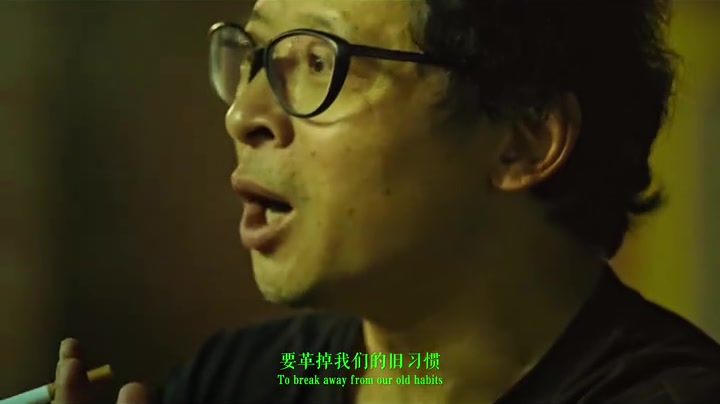
Bai Ming / source frame
02 / VISUAL REFERENCE / 视觉参照Bai Ming / source frame白明 / 资料帧

A question about novelty reveals how expertise and inherited criteria decide what a medium is allowed to become.

关于新颖的追问揭示了专业权威与既有标准如何决定一种媒介能够成为什么。

Red object in a garden-like setting
03 / VISUAL REFERENCE / 视觉参照Red object in a garden-like setting物件与花园

The displaced manufactured object tests how design, mobility and nature are staged inside one constructed environment.

被移置的工业物件检验设计、移动性与自然如何在人工环境中被共同编排。

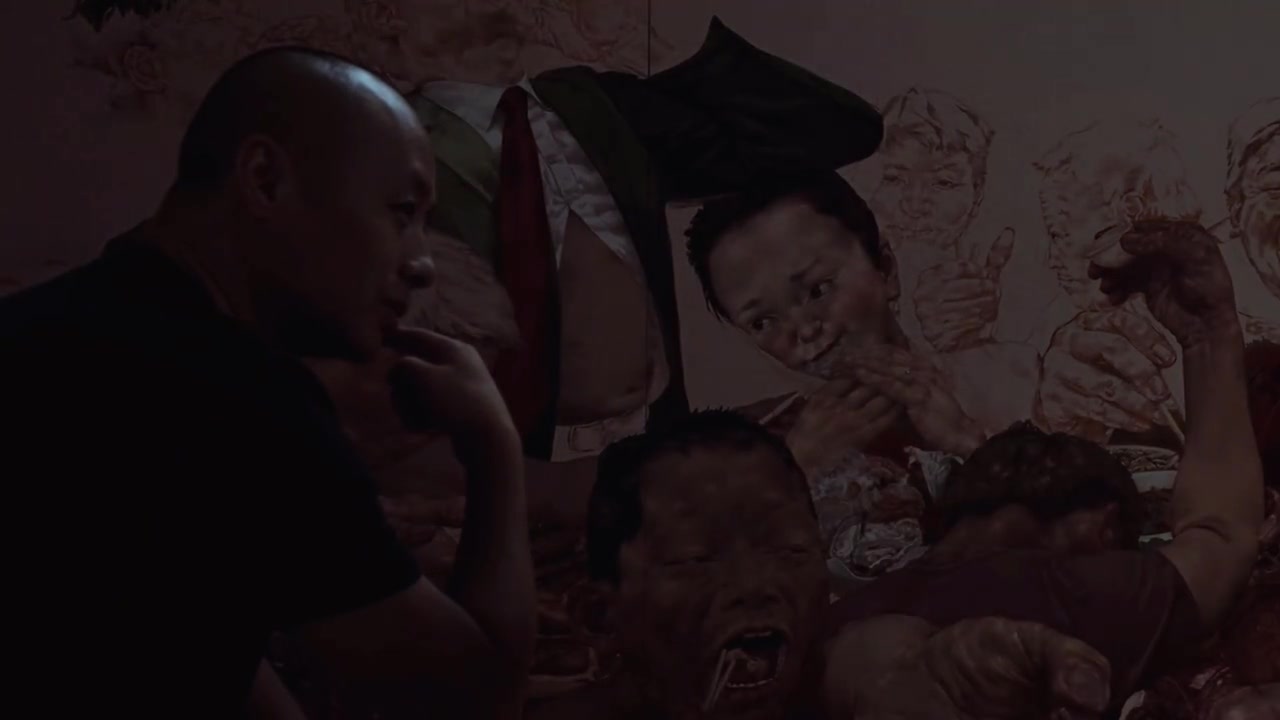
Dialogue beside a painting
04 / VISUAL REFERENCE / 视觉参照Dialogue beside a painting绘画与相遇

Conversation in front of the work reveals interpretation as a public relation rather than a private response.

作品前的对话把阐释显现为公共关系,而不是私人反应。

  1. Tim Ingold, Making: Anthropology, Archaeology, Art and Architecture, Routledge, 2013.Anthropology · Contextual readingDescribes knowledge as correspondence with active materials rather than the imposition of a prior design.把知识理解为与活跃材料的对应,而非预设设计的强加。
  2. Glenn Adamson, Thinking Through Craft, Berg, 2007.Craft theory · Contextual readingUses craft as a critical category for examining art's hierarchy of value.以工艺为批判范畴,检视艺术的价值等级。
  3. Richard Sennett, The Craftsman, Yale University Press, 2008.Social theory · Contextual readingConnects skilled making to repetition, judgement and the ethics of doing a job well.连接熟练制作、重复、判断与把事情做好的伦理。
  4. Jane Bennett, Vibrant Matter, Duke University Press, 2010.New materialism · Contextual readingDistributes agency across human and nonhuman material assemblages.把行动能力分布到人类与非人材料组装之间。
  5. David Pye, The Nature and Art of Workmanship, Bloomsbury, 2015 edition.Design theory · Contextual readingDistinguishes workmanship of risk from workmanship of certainty without romanticising handcraft.区分风险性制作与确定性制作,同时避免浪漫化手工。
  6. Yuk Hui, Art and Cosmotechnics, University of Minnesota Press, 2021.Philosophy of technology · Contextual readingPlaces art and technology within plural cosmological and historical relations.把艺术与技术置于多元宇宙观和历史关系中。
05

Rhythm, Improvisation and Translation

节奏、即兴与翻译

Music and relation understood through situated histories rather than frictionless universality.

通过具体历史而非无摩擦的普遍性来理解音乐与关系。

IMAGES BESIDE THE READER / 与读本并置的图像04 IMAGES
Sound production setup
01 / VISUAL REFERENCE / 视觉参照Sound production setup声音制作

Mixer, monitor, cables and seating reveal sound as an arranged field of audibility rather than invisible support.

调音台、监视器、线缆与座位揭示声音是被编排的可听场,而非隐形支持。

Voice in public space
02 / VISUAL REFERENCE / 视觉参照Voice in public space声音与公共空间

The speaking situation locates voice among listeners, plants and an informal environment rather than on a separated stage.

发言现场把声音置于听众、植物与非正式环境之间,而不是隔离的舞台上。

Collective studio situation
03 / VISUAL REFERENCE / 视觉参照Collective studio situation工作室档案

The group record keeps the collective presence of a studio situation: bodies, tools, conversation and shared time.

这张集体资料保留了工作室现场的共同在场:身体、工具、对话与共享时间。

WU—LIAO conversation with Kong Hongwei
04 / VISUAL REFERENCE / 视觉参照WU—LIAO conversation with Kong Hongwei孔宏伟 / 对话帧

The studio relation makes listening, rhythm and technical equipment visible as part of the production of musical knowledge.

工作室关系使倾听、节奏与技术设备作为音乐知识的生产条件共同可见。

  1. George E. Lewis, A Power Stronger Than Itself, University of Chicago Press, 2008.Music history · Contextual readingLinks improvisation, experimental practice, collective agency and racialised institutions.连接即兴、实验实践、集体行动与种族化制度。
  2. Édouard Glissant, Poetics of Relation, University of Michigan Press, 1997.Poetics · Contextual readingSupports relation and opacity without demanding transparent sameness.支持关系与不透明权,同时拒绝透明同一性。
  3. Jacques Attali, Noise: The Political Economy of Music, University of Minnesota Press, 1985.Music theory · Contextual readingReads musical organisation as an anticipation of social and economic order.把音乐组织理解为社会经济秩序的预演。
  4. Fred Moten, In the Break, University of Minnesota Press, 2003.Black studies · Contextual readingExamines voice, sound and performance where objectification and resistance meet.研究声音与表演中物化和抵抗相遇的位置。
  5. Georgina Born, Eric Lewis and Will Straw, eds., Improvisation and Social Aesthetics, Duke University Press, 2017.Music studies · Contextual readingTreats improvisation as social organisation across artistic and everyday practices.把即兴理解为跨越艺术与日常实践的社会组织。
  6. Brandon LaBelle, Background Noise: Perspectives on Sound Art, Bloomsbury, 2015 edition.Sound studies · Contextual readingLocates sound art through architecture, social space and listening situations.通过建筑、社会空间与倾听情境定位声音艺术。
06

Boredom, Attention and Time

无聊、注意与时间

Sources for reading boredom as a temporal threshold shaped by labour, technology and unequal access to rest.

把无聊理解为由劳动、技术与不平等休息权共同塑造的时间阈限。

IMAGES BESIDE THE READER / 与读本并置的图像04 IMAGES
Long-form interview production
01 / VISUAL REFERENCE / 视觉参照Long-form interview production长谈现场

Camera, interviewer and participant remain visible as a triangular structure of attention.

镜头、采访者与受访者保持可见,形成注意力的三角结构。

WU—LIAO conversation with Sun Xun
02 / VISUAL REFERENCE / 视觉参照WU—LIAO conversation with Sun Xun孙逊 / 对话帧

Silhouette, screen and subtitle form a layered image of selfhood: the speaking body remains present while representation interrupts it.

剪影、屏幕与字幕形成关于自我的分层图像:说话的身体仍然在场,同时被再现机制打断。

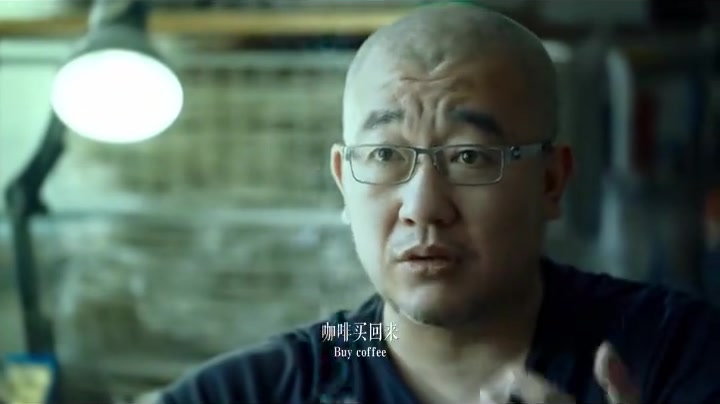
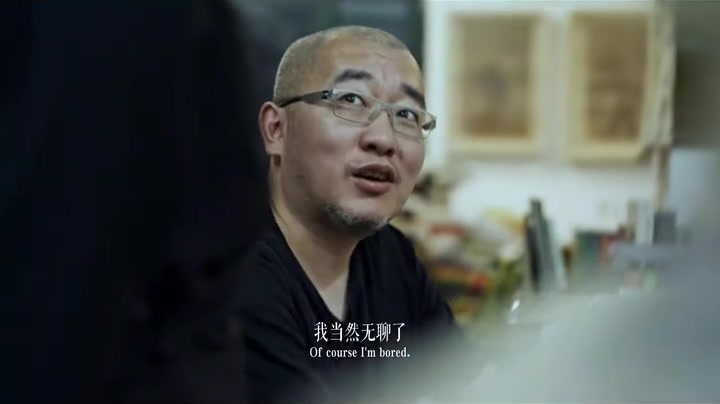
Sun Xun / boredom
03 / VISUAL REFERENCE / 视觉参照Sun Xun / boredom孙逊 / 无聊

Boredom becomes an interval in which utility loosens its hold and attention can turn in another direction.

无聊成为一段间隙:功用暂时松开控制,注意力得以转向别处。

Conversation in an open landscape
04 / VISUAL REFERENCE / 视觉参照Conversation in an open landscape对话与地平线

The upward viewpoint makes exposure to weather and horizon visible, shifting dialogue away from a controlled studio situation.

仰视视角使天气与地平线的暴露变得可见,让对话离开受控的工作室环境。

  1. Henri Lefebvre, Rhythmanalysis, Continuum, 2004.Social theory · Contextual readingOffers rhythm as a method for reading bodies, repetition and everyday space.以节奏为方法阅读身体、重复与日常空间。
  2. Jonathan Crary, 24/7: Late Capitalism and the Ends of Sleep, Verso, 2013.Media theory · Contextual readingCritiques continuous attention economies and the erosion of nonproductive time.批判持续运转的注意力经济与非生产性时间的消退。
  3. Martin Heidegger, The Fundamental Concepts of Metaphysics, Indiana University Press, 1995.Philosophy · Contextual readingProvides a demanding account of profound boredom as disclosure rather than missing stimulation.把深层无聊理解为显露,而非刺激不足。
  4. Siegfried Kracauer, The Mass Ornament, Harvard University Press, 1995.Cultural criticism · Contextual readingConnects distraction, entertainment and the organisation of modern collective life.连接分心、娱乐与现代集体生活的组织。
  5. Byung-Chul Han, The Scent of Time, Polity, 2017.Philosophy · Contextual readingContrasts lingering duration with accelerated sequences of disconnected moments.以停留的持续时间对抗加速且断裂的瞬间序列。
  6. Hartmut Rosa, Resonance, Polity, 2019.Sociology · Contextual readingFrames alienation and resonance as different modes of relation to the world.把异化与共鸣理解为两种不同的世界关系模式。
07

Pedagogy and Perception

教育与感知

Art education considered as the construction of perceptual capacity, critical agency and shared inquiry.

把艺术教育视为感知能力、批判主体性与共同研究的建构。

IMAGES BESIDE THE READER / 与读本并置的图像04 IMAGES
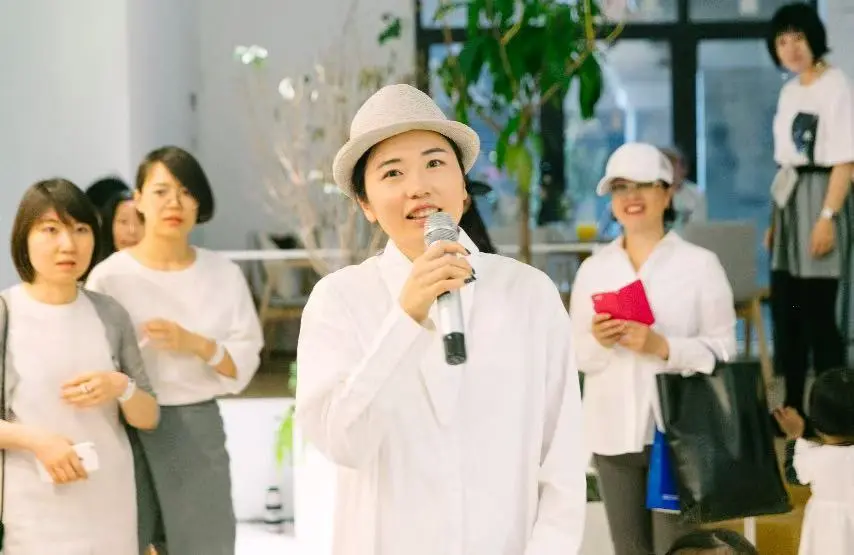
Public programme address
01 / VISUAL REFERENCE / 视觉参照Public programme address公共项目

A microphone distributes attention but also marks who temporarily holds the right to speak.

麦克风分配注意力,同时标示谁暂时拥有发言权。

Collective studio situation
02 / VISUAL REFERENCE / 视觉参照Collective studio situation工作室档案

The group record keeps the collective presence of a studio situation: bodies, tools, conversation and shared time.

这张集体资料保留了工作室现场的共同在场:身体、工具、对话与共享时间。

Interview inside a gallery
03 / VISUAL REFERENCE / 视觉参照Interview inside a gallery展览访谈

The interview operates inside the exhibition rather than after it, joining mediation and display in one situation.

访谈发生在展览内部而不是展览之后,使传播与陈列进入同一现场。

WU—LIAO conversation with Kong Hongwei
04 / VISUAL REFERENCE / 视觉参照WU—LIAO conversation with Kong Hongwei孔宏伟 / 对话帧

The studio relation makes listening, rhythm and technical equipment visible as part of the production of musical knowledge.

工作室关系使倾听、节奏与技术设备作为音乐知识的生产条件共同可见。

  1. Elliot W. Eisner, The Arts and the Creation of Mind, Yale University Press, 2002.Arts education · Contextual readingExplains how artistic practice cultivates forms of judgement unavailable to fixed rules.说明艺术实践如何培养固定规则无法替代的判断形式。
  2. bell hooks, Teaching to Transgress, Routledge, 1994.Critical pedagogy · Contextual readingTreats the classroom as a situated practice of freedom, voice and embodied presence.把课堂理解为自由、声音与身体在场的实践。
  3. John Dewey, Art as Experience, Perigee/Penguin, 2005 edition.Aesthetics · Contextual readingLocates art within patterned experience rather than isolated cultural objects.把艺术置于有结构的经验中,而不是孤立文化物件中。
  4. Paulo Freire, Pedagogy of the Oppressed, Bloomsbury Academic, 2018 edition.Critical pedagogy · Contextual readingOpposes banking education with dialogical, problem-posing inquiry.以对话式、问题化研究反对储蓄式教育。
  5. Jacques Rancière, The Ignorant Schoolmaster, Stanford University Press, 1991.Philosophy of education · Contextual readingQuestions explanatory hierarchy and the presumption of unequal intelligence.质疑解释等级与智力不平等的预设。
  6. Maxine Greene, Releasing the Imagination, Jossey-Bass, 1995.Arts education · Contextual readingConnects imagination, social possibility and education through the arts.通过艺术连接想象、社会可能性与教育。
08

Image, Face and Platform

图像、面孔与平台

A visual-culture reader for portraiture, circulation, interface conditions and the politics of visibility.

关于肖像、传播、界面条件与可见性政治的视觉文化读本。

IMAGES BESIDE THE READER / 与读本并置的图像04 IMAGES
WU—LIAO conversation with Ma Jinghu
01 / VISUAL REFERENCE / 视觉参照WU—LIAO conversation with Ma Jinghu马精虎 / 对话帧

A walking conversation connects the face, historical visibility and accelerated social time to bodily movement through the city.

行走中的对话把面孔、历史可见性与加速社会时间连接到城市中的身体移动。

The face of an era / source frame
02 / VISUAL REFERENCE / 视觉参照The face of an era / source frame时代的面孔 / 资料帧

The face appears as a surface where historical symbols, social tempo and image conventions accumulate.

面孔在这里成为历史符号、社会节奏与图像惯例不断累积的表面。

Wu Qian behind the camera
03 / VISUAL REFERENCE / 视觉参照Wu Qian behind the camera镜头与见证

The visible recording apparatus prevents the field image from pretending to be an unmediated encounter.

可见的记录装置阻止田野图像把相遇伪装成未经媒介化的真实。

Location-production record in a mountain landscape
04 / VISUAL REFERENCE / 视觉参照Location-production record in a mountain landscape田野制作 / 01

Camera placement and terrain show that access and technical position are part of what the image can know.

镜头位置与地形说明:进入条件与技术位置共同决定图像能够知道什么。

  1. Hito Steyerl, Duty Free Art, Verso, 2017.Contemporary art · Contextual readingExamines circulation, institutional power and images operating beyond stable locations.检视流通、制度权力与脱离稳定地点运作的图像。
  2. Lev Manovich, The Language of New Media, MIT Press, 2001.Media theory · Contextual readingProvides a vocabulary for interface, database, modularity and computational image culture.为界面、数据库、模块化与计算图像文化提供词汇。
  3. W. J. T. Mitchell, What Do Pictures Want?, University of Chicago Press, 2005.Visual culture · Contextual readingTreats images as active social relations rather than passive carriers of meaning.把图像理解为活跃社会关系,而非被动意义载体。
  4. Tina M. Campt, Listening to Images, Duke University Press, 2017.Black visual studies · Contextual readingDevelops a practice of attending to quiet, affective frequencies in photographs.发展一种倾听照片中安静、情感频率的实践。
  5. Ariella Aïsha Azoulay, The Civil Contract of Photography, Zone Books, 2008.Photography theory · Contextual readingFrames photography as a political relation among photographed people, photographers and viewers.把摄影理解为被摄者、拍摄者与观看者之间的政治关系。
  6. Jonathan Crary, Techniques of the Observer, MIT Press, 1990.Visual studies · Contextual readingHistoricises the observer as produced through technologies and institutions of vision.把观察者放回视觉技术与制度的历史生成过程。
09

Site, Dwelling and Memory

地点、居住与记忆

References for understanding place as contested relation among architecture, movement, labour and memory.

把地点理解为建筑、移动、劳动与记忆之间具有争议的关系。

IMAGES BESIDE THE READER / 与读本并置的图像04 IMAGES
Collective field research network
01 / VISUAL REFERENCE / 视觉参照Collective field research network田野关系

A group portrait shifts the field from individual observation toward a temporary network of witnesses and local knowledge.

集体影像把田野从个人观察转向由见证者与地方知识构成的临时网络。

Interior field conversation
02 / VISUAL REFERENCE / 视觉参照Interior field conversation田野制作 / 02

The domestic setting keeps architecture, everyday objects and hospitality inside the oral-history situation.

室内现场让建筑、日常物件与待客关系共同进入口述史情境。

Production credit naming Wu Qian
03 / VISUAL REFERENCE / 视觉参照Production credit naming Wu Qian制片人署名

The production poster preserves Wu Qian's Co-Executive Producer credit.

制作海报保留了吴倩“联合总制片人”的署名。

Conversation in an open landscape
04 / VISUAL REFERENCE / 视觉参照Conversation in an open landscape对话与地平线

The upward viewpoint makes exposure to weather and horizon visible, shifting dialogue away from a controlled studio situation.

仰视视角使天气与地平线的暴露变得可见,让对话离开受控的工作室环境。

  1. Miwon Kwon, One Place after Another, MIT Press, 2002.Art history · Contextual readingTracks the transformation of site specificity from location to social and institutional relation.追踪场域特定性从地理地点向社会、制度关系的转变。
  2. Yi-Fu Tuan, Space and Place, University of Minnesota Press, 1977.Human geography · Contextual readingDistinguishes abstract space from place formed through experience and attachment.区分抽象空间与由经验、依恋生成的地点。
  3. Gaston Bachelard, The Poetics of Space, Penguin Classics, 2014 edition.Phenomenology · Contextual readingReads intimate architecture through memory, imagination and inhabitation.通过记忆、想象与居住阅读亲密建筑。
  4. Doreen Massey, For Space, Sage, 2005.Geography · Contextual readingDefines space as multiple, relational and always under construction.把空间界定为多重、关系性且持续建构的过程。
  5. Tim Ingold, Being Alive, Routledge, 2011.Anthropology · Contextual readingConnects movement, dwelling and environmental knowledge through lived paths.通过生活路径连接移动、居住与环境知识。
  6. Dolores Hayden, The Power of Place, MIT Press, 1995.Urban history · Contextual readingShows how public history and spatial practice can recover marginalised urban memories.说明公共历史与空间实践如何恢复被边缘化的城市记忆。
10

Production, Infrastructure and Care

制片、基础设施与照料

Sources for treating support, logistics, maintenance and time allocation as constitutive of artistic form.

把支持、后勤、维护与时间分配理解为艺术形式的构成条件。

IMAGES BESIDE THE READER / 与读本并置的图像04 IMAGES
Location-production record in a mountain landscape
01 / VISUAL REFERENCE / 视觉参照Location-production record in a mountain landscape田野制作 / 01

Camera placement and terrain show that access and technical position are part of what the image can know.

镜头位置与地形说明:进入条件与技术位置共同决定图像能够知道什么。

Participatory workshop
02 / VISUAL REFERENCE / 视觉参照Participatory workshop参与式工作坊

Hands, material and shared table make participation visible as a negotiated process of making.

手、材料与共享桌面使参与显现为协商性的制作过程。

Interior field conversation
03 / VISUAL REFERENCE / 视觉参照Interior field conversation田野制作 / 02

The domestic setting keeps architecture, everyday objects and hospitality inside the oral-history situation.

室内现场让建筑、日常物件与待客关系共同进入口述史情境。

Production credit naming Wu Qian
04 / VISUAL REFERENCE / 视觉参照Production credit naming Wu Qian制片人署名

The production poster preserves Wu Qian's Co-Executive Producer credit.

制作海报保留了吴倩“联合总制片人”的署名。

  1. Shannon Jackson, Social Works, Routledge, 2011.Performance studies · Contextual readingMakes support systems and institutional maintenance central to socially engaged art.把支持系统与制度维护置于社会参与艺术的中心。
  2. María Puig de la Bellacasa, Matters of Care, University of Minnesota Press, 2017.Science studies · Contextual readingDefines care as material, affective and political obligation rather than sentiment alone.把照料理解为物质、情感与政治义务,而不只是情绪。
  3. Howard S. Becker, Art Worlds, 25th anniversary edition, University of California Press, 2008.Sociology of art · Contextual readingShows artistic production as coordinated activity among many visible and invisible contributors.把艺术生产揭示为众多可见与不可见参与者的协调活动。
  4. Bojana Kunst, Artist at Work, Zero Books, 2015.Performance theory · Contextual readingExamines how project culture, flexibility and productivity shape contemporary artistic labour.检视项目制、灵活性与生产力如何塑造当代艺术劳动。
  5. Sarah Sharma, In the Meantime, Duke University Press, 2014.Media studies · Contextual readingAnalyses unequal temporalities and the labour required to synchronise other people's time.分析不平等时间性,以及同步他人时间所需的劳动。
  6. Susan Leigh Star, ‘The Ethnography of Infrastructure,’ American Behavioral Scientist 43, no. 3, 1999.Infrastructure studies · Contextual readingOffers a method for seeing systems that become visible mainly when they fail.提供一种观察平时隐身、故障时才显现之系统的方法。